Days 27 and 28: The Cat Whisperer.
I realize that I tend to become somewhat impassioned with things, particularly food things, but seriously, bread is and will always be the song I sing most loudly. It’s a never ending source of fascination for me to gaze into a jar of my sourdough starter and watch my billion little pets eat slowly, teeny pockets of gas rising to the top like the primordial ooze of life that it actually is. So I hope you’ll forgive me as I systematically and unabashedly try to convert you into a bread maniac.
Bread is something I’ve researched on an über-hobby level for several years at this point, and I’m continually telling people how simple it is to craft really good bread at home. I stand by that, always. You’d be hard pressed to find better bread that what you can make at home, unless you live near a really hot bakery. And I’m not talking about Plantera or whatever it’s called; not a large chain bakery. Operations like that can make palatable bread, for sure, but I promise, you can do better. And you can certainly outdo the supermarket (yes, even Wegmans, which is my favorite too).
That being said, there’s something of an elusive quality that bread has. Say you mix identical amounts of flour, water, yeast, and salt together on two different days, and treat them in what seems the same way. On the first day, you create a loaf of golden crusty wonderfulness, crying out to you to break it apart and let it warm you down to the roots of your very soul, and on the other day you end up with some horrific steaming mass that might have been found in the corner of a wet sauna somewhere in the unsavory part of town. This is what can happen if you’re not paying attention.
As I learn more about bread, I’m learning that it’s like cats. My major error with bread is that I’ve been trying all along to get it to cooperate with me. Have you ever had a cat that was willing to cooperate with you on any level? I’m zero for eighteen on that score. You have to meet the bread/cat on its own terms. What’s dawning on me now is not to force our bread into the package we need it to be, but to let it show us what it’s capable of. If we follow our dough, we learn from it. We let it take us down its own avenues, and it shows us into unknown and exciting quarters, as it’s been doing for breadmakers for millennia.
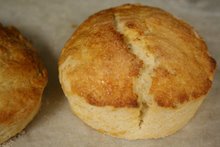
Our first bread projects were clearly aimed at lassoing in any nonbelievers. We began with a semolina loaf. Semolina is flour milled from durum wheat, which has an very high gluten content and therefore makes a very strong and forgiving bread dough for first-timers. The taste of it doesn’t imply that it’s so simple, though; it’s got a really deep, buttery, and almost corn-like flavor. The next two breads didn’t exactly turn people away, either. We made a rosemary and olive dough – our team crafted rolls from it, one of which gave me a pretty awesome sandwich the next day – and a Provençal bread called fougasse (foo-`gahss). I don’t know how I’ve managed to miss this one. It’s made like many other breads, only the water you add to the dough for fougasse has herbs soaked in it first. Oh, and then there’s the matter of several ounces of crumbled bacon and a few tablespoons of bacon grease which are kneaded into the dough. Yeah. Pretty much. We also crafted our first baguettes – I didn’t feel like I had inadvertently stepped into a Parisian bakery or anything, but, if you were asked to identify them, you would have said “baguette.” Pretty spiffy for the first time on the water in that particular boat.
There are certainly advantages that appear in the professional kitchen – fifty-thousand-dollar ovens with steam injectors; giant tubs of fresh, high-quality ingredients; electronic scales and rock solid gadgets; eighty-quart stand mixers that have wheeled carts and hydraulic lift systems for the bowls; a knowledgeable chef telling you what to do and how to do it. Yet all these advantages amount to nothing if the doughmaker isn’t listening to his dough, and you can certainly do that at home. Other than ingredients, all you need is one each of wooden spoon, bowl, counter, pan, and oven, and a dash of patience. If there’s anything further I can do to convince you to try this, let me know; even if it’s as simple as shutting up about it.
I fully intend to continue ranting either way.
Saturday, January 27, 2007


Wednesday, January 24, 2007
Day 26: Fungus. Gas. Bacteria.
The debate I’ve been having with myself daily has just been rearranged. Since starting school, I’ve wondered constantly whether I should continue with my studies after my current program has ended. Baking is wonderful and warm, but cooking has always appealed to me in nearly equal measure – my treasured and rare free weekend, the one that just passed, was filled from 8:00am to 10:00pm with shopping, preparation, and cooking, as was most of Sunday. Not to discredit the art, but I’m beginning to think that I can be as competent a cook as I feel I need to become without formal training – I don’t wish to work as a professional culinary chef. In bread, though, pastry has a new opponent in the ring. It might not be so obvious a competitor for pastry as culinary arts are, but the people who excel at bread, like those who excel at pastry or chocolate or wine, are the ones who dedicate themselves squarely to that particular craft.
My most serious hobby over the last decade, bread is something I have come to love in a way that could only be the result of obsession and infatuation, to which I’ll readily admit. (The seven different lumps, sludges, or blobs of dough in various states of refrigeration around my apartment would give it away anyway.) When you manage to combine four or five common ingredients, let them react with each other for a while, and then heat them a bit, and you end up with fresh, hearty, wholesome, life-sustaining food, your mind spins with romance and pleasure. You’ve created. From your simple bowl has come a food that no country, no region is without in some form, a food that has sustained and fueled life and economy and religion and war for thousands of years. A history of bread is a history of the world around us and its constituent cultures. To make it in your own kitchen evokes this grand place in the scheme of things, and it’s spellbinding. I know I’m not crazy in feeling this way, because I’ve shown people how to make it, and it’s never failed to amaze them how simple it is. Somehow this oldest craft of the home kitchen has become very mysterious; people always say things like “Oh, I could never make bread, it’s too complicated.” Well congratulations, you have a shorter attention span than the gold miners who wore their yeast in little pouches they hung around their necks, or the Israelites who made it even as they fled Egypt with Moses. Alright, it takes a little more time and effort than, say, pulling the slick plastic skin off a Hungry Man prepackaged microwaveable dinner. But to be perfectly frank, there’s really nothing elusive about it, and each time you make it, you have a better understanding of it than you did the time before. For me and my fellow bread-nerds, it is impossible to break free of its grip.
Our introduction to bread began with a simple semolina loaf, which we constructed today but won’t bake until tomorrow. We did, however, go thoroughly over the process. Here it is, in a great big nutshell.
To make something that can be called bread, you really need flour, liquid, and salt. Yeast, too, if you want a leavened bread, which is what we’ll concentrate on since that’s the kind most of us eat regularly. Adding water to wheat flour, and then mixing it around, causes all the protein molecules in the flour to stick together, forming an elastic network that we call gluten. This gluten network is capable of being inflated, much like a balloon, and this is exactly what we want to happen; we want the bread to rise. The way we get air into those little balloon-like pockets is yeast. Yeast is a tiny fungus that eats sugar. Starch, when it breaks down, is sugar, so in a bread dough, yeast has plenty of food. The waste product of the yeast during all this sugar bingeing is gas – carbon dioxide. This gas inflates all the little (and sometimes not-so-little) pockets of gluten, resulting in rising, and, eventually, the network of holes throughout the bread which give it its texture. This whole process is due to fermentation – the other byproduct is indeed alcohol, which doesn’t concern the breadmaker so much since it evaporates from the loaf during baking. Now, add to that the working of different varieties of bacteria, and we have a little flavor factory going on. Yes, bacteria. It’s like an advertisement for rinsing all the soap off your clean dishes. America’s current phobia with bacteria is far too broad in scope; there are some really good ones out there, the kinds that give us not only bread but cheese, yogurt, vinegar, and sausage, and a host of other products. Give that flavor a little time to develop, and you’re making serious bread.
The really cool thing about all this chemistry is that it happens without you interfering. Once you put all these things in touch, as long as you meet their very basic environmental requirements, they just do what they’re supposed to do. And that’s it. You bake it. That’s the simple part: put it in a hot oven. My usual challenge for nonbelievers stands for this as well: if you don’t believe me, go try it. Now, it’s going to take a little effort on your part to throw it together properly, and a little patience to let it do its thing. But what in the world beats making something at home that’s better on your third or fourth attempt than any you could go buy? That’s the really cool thing about bread these days. As restaurant food becomes more and more removed from what we can accomplish in our own kitchens, bakers the world over strive to make bread as rustically as they can. It adheres more to tradition and history as it becomes more popular.
Well, maybe that and origami. But bread tastes better.
The debate I’ve been having with myself daily has just been rearranged. Since starting school, I’ve wondered constantly whether I should continue with my studies after my current program has ended. Baking is wonderful and warm, but cooking has always appealed to me in nearly equal measure – my treasured and rare free weekend, the one that just passed, was filled from 8:00am to 10:00pm with shopping, preparation, and cooking, as was most of Sunday. Not to discredit the art, but I’m beginning to think that I can be as competent a cook as I feel I need to become without formal training – I don’t wish to work as a professional culinary chef. In bread, though, pastry has a new opponent in the ring. It might not be so obvious a competitor for pastry as culinary arts are, but the people who excel at bread, like those who excel at pastry or chocolate or wine, are the ones who dedicate themselves squarely to that particular craft.
My most serious hobby over the last decade, bread is something I have come to love in a way that could only be the result of obsession and infatuation, to which I’ll readily admit. (The seven different lumps, sludges, or blobs of dough in various states of refrigeration around my apartment would give it away anyway.) When you manage to combine four or five common ingredients, let them react with each other for a while, and then heat them a bit, and you end up with fresh, hearty, wholesome, life-sustaining food, your mind spins with romance and pleasure. You’ve created. From your simple bowl has come a food that no country, no region is without in some form, a food that has sustained and fueled life and economy and religion and war for thousands of years. A history of bread is a history of the world around us and its constituent cultures. To make it in your own kitchen evokes this grand place in the scheme of things, and it’s spellbinding. I know I’m not crazy in feeling this way, because I’ve shown people how to make it, and it’s never failed to amaze them how simple it is. Somehow this oldest craft of the home kitchen has become very mysterious; people always say things like “Oh, I could never make bread, it’s too complicated.” Well congratulations, you have a shorter attention span than the gold miners who wore their yeast in little pouches they hung around their necks, or the Israelites who made it even as they fled Egypt with Moses. Alright, it takes a little more time and effort than, say, pulling the slick plastic skin off a Hungry Man prepackaged microwaveable dinner. But to be perfectly frank, there’s really nothing elusive about it, and each time you make it, you have a better understanding of it than you did the time before. For me and my fellow bread-nerds, it is impossible to break free of its grip.
Our introduction to bread began with a simple semolina loaf, which we constructed today but won’t bake until tomorrow. We did, however, go thoroughly over the process. Here it is, in a great big nutshell.
To make something that can be called bread, you really need flour, liquid, and salt. Yeast, too, if you want a leavened bread, which is what we’ll concentrate on since that’s the kind most of us eat regularly. Adding water to wheat flour, and then mixing it around, causes all the protein molecules in the flour to stick together, forming an elastic network that we call gluten. This gluten network is capable of being inflated, much like a balloon, and this is exactly what we want to happen; we want the bread to rise. The way we get air into those little balloon-like pockets is yeast. Yeast is a tiny fungus that eats sugar. Starch, when it breaks down, is sugar, so in a bread dough, yeast has plenty of food. The waste product of the yeast during all this sugar bingeing is gas – carbon dioxide. This gas inflates all the little (and sometimes not-so-little) pockets of gluten, resulting in rising, and, eventually, the network of holes throughout the bread which give it its texture. This whole process is due to fermentation – the other byproduct is indeed alcohol, which doesn’t concern the breadmaker so much since it evaporates from the loaf during baking. Now, add to that the working of different varieties of bacteria, and we have a little flavor factory going on. Yes, bacteria. It’s like an advertisement for rinsing all the soap off your clean dishes. America’s current phobia with bacteria is far too broad in scope; there are some really good ones out there, the kinds that give us not only bread but cheese, yogurt, vinegar, and sausage, and a host of other products. Give that flavor a little time to develop, and you’re making serious bread.
The really cool thing about all this chemistry is that it happens without you interfering. Once you put all these things in touch, as long as you meet their very basic environmental requirements, they just do what they’re supposed to do. And that’s it. You bake it. That’s the simple part: put it in a hot oven. My usual challenge for nonbelievers stands for this as well: if you don’t believe me, go try it. Now, it’s going to take a little effort on your part to throw it together properly, and a little patience to let it do its thing. But what in the world beats making something at home that’s better on your third or fourth attempt than any you could go buy? That’s the really cool thing about bread these days. As restaurant food becomes more and more removed from what we can accomplish in our own kitchens, bakers the world over strive to make bread as rustically as they can. It adheres more to tradition and history as it becomes more popular.
Well, maybe that and origami. But bread tastes better.
Tuesday, January 23, 2007
Intermission: Produce.
My regular posting will resume this evening or tomorrow, and you’ll find out all about our new chef, new students (!), and new projects.
Meanwhile, I’ve gone ahead and created a space for my first quarter final paper, right here. It’s all about fruit. It should give you some insight into selecting and storing several fruits that you should be able to find locally. It’ll also give you an introduction to exactly how much I’m into using local, seasonal produce. You can take the boy off the farm…
I hope you enjoy it if you have a moment to take a gander. Otherwise, I’ll see you back here soon!
My regular posting will resume this evening or tomorrow, and you’ll find out all about our new chef, new students (!), and new projects.
Meanwhile, I’ve gone ahead and created a space for my first quarter final paper, right here. It’s all about fruit. It should give you some insight into selecting and storing several fruits that you should be able to find locally. It’ll also give you an introduction to exactly how much I’m into using local, seasonal produce. You can take the boy off the farm…
I hope you enjoy it if you have a moment to take a gander. Otherwise, I’ll see you back here soon!
Friday, January 19, 2007
Days 23, 24, and 25: Filling. Foiling. Failing?
First and foremost, thanks, readers, for your patience with me this week as I prepared for my first-quarter (“Module I”) final and practical exams, which were yesterday. If you’d forgive the lack of my usual diligence in posting regularly, and continue reading, I’d be ever so grateful. Picture it… Tuesday… New York City…
Those French. The really amusing thing about French pastry isn’t that they’ve thought of every imaginable combination of things; it’s more the fact that they have names for any and all imaginable variations of a product, distinct names, which don’t translate. This only adds to the esoteric nature that’s inherent to things French to begin with. Nowhere does their thinly veiled ploy to maintain the vastest repertoire of desserts and amuses bouches become more apparent than with cream puff pastry, or pâte à choux (pot-ah-shoe – please don’t say pot-AY or I may have to spank you).
Made by boiling water with butter and salt, stirring in flour, and then beating in eggs one by one, choux pastry is one of the more versatile ingredients in the baker’s kitchen. It’s piped onto sheets and when baked, it puffs right up, and the center (ideally) becomes a hollow. A classic accompaniment to baked choux pastry is pastry cream, which is made by boiling milk and sugar, adding some form of starch, and then drizzling a bit of this hot liquid into some eggs while whisking. Several more eggs are then gingerly incorporated, and the whole mess is returned to the boil. (Yes, the boil. You can do that without making scrambled eggs here since the starch molecules insulate the proteins from one another and prevent them from coagulating… but that’s another blog.) Stir in a bit of vanilla for flavor, and butter for general goodness, and you’re ready to go.
What you can make by marrying these two ingredients is limited only to the shapes your mind can devise, but don’t worry: when you’ve found a unique shape or vehicle of presentation, just ask someone in the know and they’ll tell you what it’s called in French. If you fill small puffs with cream, they’re called petit choux. If you fill big ones with it, they’re called choux à la crème. Long ones, éclairs. Round ones, Paris-Brest. If you fill big ones with pastry cream and then a few mixed berries, they’re probably called boîte à bijoux (jewel box) or something (and if they’re not, that name is copyrighted, by me, just now). Dip them in caramel, fill them with cream, and make a giant cone out of them, like they used to do at French weddings, and you have the inimitable croquembouche. And when I say “doesn’t translate,” I’m referring to terms just like this one – the English word for croquembouche is simply croquembouche, since if you tried to translate the word it would boil down to something like “crustymouth.” I can’t imagine a wedding where that would go over well. (Although for all the caramel left on my face after I was done assembling mine, the French seem to have a point.) These confections are all rather simple – a bland shell filled with lightly flavored cream – but they do not disappoint, as the thirty or so of them which are currently floating in my stomach could tell you.
Choux pastry is where texture starts to assert itself as an enormously important aspect of dessert making. Given that the flavors involved can be somewhat plain (which is not to say at all unpleasant), texture steps forward and shares the spotlight for a moment. The coalescence of a light, crisp shell with velvet pastry cream is the truly addicting aspect of choux. When even as simple a textural experience as this can be so deeply satisfying, you begin to realize that you’ve only begun to explore the avenues of texture. And it only adds to the fun that, simply by virtue of physical laws, when you bite into a choux, you get pastry cream all over yourself.
The freezer saga continues. On Wednesday, I noted that the onetime broken freezer in our classroom was, and had been for some time, at around thirty degrees below zero Fahrenheit. The one next door, where we had put our ice creams and sorbets, to “firm up,” was at a balmy seventeen. I promptly moved my containers to the now arctic unit closer at hand, hoping to get their contents to solidify enough to survive my 42- to 62-minute commute. They well may, the only problem being that during their time in warmer climes, the actual brittle in the cashew brittle ice cream dissolved, and is now a puddle of caramel at the bottom (which maybe I can sell as cashew caramel ice cream), and the port wine reduction that so gorgeously marbled my tangerine sorbet is in a similar state (which, if I mix it together, I might be able to market as blood orange sorbet… maybe). All of this may be inconsequential in any case; I have my doubts as to the length of time the freezer in our classroom can maintain its Rochesterian chill.
So, finally, the exam. After days, nay, weeks, of suspense, it is finally over. Go ahead, ask me the necessary temperature of sugar syrup for use in a nougat recipe. Or to identify semolina, define nappage, or recalculate yield on a marshmallow recipe. I’m there. The written part, unsurprisingly, I wasn’t worried about – you’ve watched me write my own Cliffs Notes. No, the real test for me was the practical, which consisted of three parts: slicing an apple in a specific way in a perfectly uniform fashion (as for a French apple tart, etc.); crafting a soufflé that is properly and evenly risen, uniform in texture, and superlative in taste; and, finally, piping just one consistent border in chocolate (the pattern our choice), using that old favorite device of mine, the cornet. In a flashback to my music-major days of yore, a solid case of performance anxiety set in. So badly were my hands shaking after completing my soufflé, in fact, that the only thing I could to do relax sufficiently for the cornet work was three sinks full of dishes. (Please don’t tell anyone I’m actually capable of this; I have reputations to uphold.) Apparently, dishes and practice are the successful recipe for cornet work. Suffice it to say that I did better than I imagined I would.
And with that, our first module has drawn to a close. It’s sad, in a number of ways… our kindergarten time, that taking of the first step onto the mountaintop, which allowed us to get a real view of the world we’re in and see the horizons we hadn’t yet imagined, has drawn to a close. Also, Chef, as you know him so far from my various postings, will be leaving us. This is not uncommon at my school, but sad for all of us nonetheless. His sure guidance of us, and in particular his patience with us and all our bright-eyed questions, are not something we’ll likely encounter again, in school or after. But there are brighter sides, too. Now that we’ve had a survey of the surrounding land, we can take a step off that peak and actually begin our long march toward one of those points on the horizon. There’s a large forest still to cross, and we’ll encounter footpaths yet unimagined. But now we have a compass.
Not to mention, next week, we start BREAD! (And you thought I was writing before…)
First and foremost, thanks, readers, for your patience with me this week as I prepared for my first-quarter (“Module I”) final and practical exams, which were yesterday. If you’d forgive the lack of my usual diligence in posting regularly, and continue reading, I’d be ever so grateful. Picture it… Tuesday… New York City…
Those French. The really amusing thing about French pastry isn’t that they’ve thought of every imaginable combination of things; it’s more the fact that they have names for any and all imaginable variations of a product, distinct names, which don’t translate. This only adds to the esoteric nature that’s inherent to things French to begin with. Nowhere does their thinly veiled ploy to maintain the vastest repertoire of desserts and amuses bouches become more apparent than with cream puff pastry, or pâte à choux (pot-ah-shoe – please don’t say pot-AY or I may have to spank you).
Made by boiling water with butter and salt, stirring in flour, and then beating in eggs one by one, choux pastry is one of the more versatile ingredients in the baker’s kitchen. It’s piped onto sheets and when baked, it puffs right up, and the center (ideally) becomes a hollow. A classic accompaniment to baked choux pastry is pastry cream, which is made by boiling milk and sugar, adding some form of starch, and then drizzling a bit of this hot liquid into some eggs while whisking. Several more eggs are then gingerly incorporated, and the whole mess is returned to the boil. (Yes, the boil. You can do that without making scrambled eggs here since the starch molecules insulate the proteins from one another and prevent them from coagulating… but that’s another blog.) Stir in a bit of vanilla for flavor, and butter for general goodness, and you’re ready to go.
What you can make by marrying these two ingredients is limited only to the shapes your mind can devise, but don’t worry: when you’ve found a unique shape or vehicle of presentation, just ask someone in the know and they’ll tell you what it’s called in French. If you fill small puffs with cream, they’re called petit choux. If you fill big ones with it, they’re called choux à la crème. Long ones, éclairs. Round ones, Paris-Brest. If you fill big ones with pastry cream and then a few mixed berries, they’re probably called boîte à bijoux (jewel box) or something (and if they’re not, that name is copyrighted, by me, just now). Dip them in caramel, fill them with cream, and make a giant cone out of them, like they used to do at French weddings, and you have the inimitable croquembouche. And when I say “doesn’t translate,” I’m referring to terms just like this one – the English word for croquembouche is simply croquembouche, since if you tried to translate the word it would boil down to something like “crustymouth.” I can’t imagine a wedding where that would go over well. (Although for all the caramel left on my face after I was done assembling mine, the French seem to have a point.) These confections are all rather simple – a bland shell filled with lightly flavored cream – but they do not disappoint, as the thirty or so of them which are currently floating in my stomach could tell you.
Choux pastry is where texture starts to assert itself as an enormously important aspect of dessert making. Given that the flavors involved can be somewhat plain (which is not to say at all unpleasant), texture steps forward and shares the spotlight for a moment. The coalescence of a light, crisp shell with velvet pastry cream is the truly addicting aspect of choux. When even as simple a textural experience as this can be so deeply satisfying, you begin to realize that you’ve only begun to explore the avenues of texture. And it only adds to the fun that, simply by virtue of physical laws, when you bite into a choux, you get pastry cream all over yourself.
The freezer saga continues. On Wednesday, I noted that the onetime broken freezer in our classroom was, and had been for some time, at around thirty degrees below zero Fahrenheit. The one next door, where we had put our ice creams and sorbets, to “firm up,” was at a balmy seventeen. I promptly moved my containers to the now arctic unit closer at hand, hoping to get their contents to solidify enough to survive my 42- to 62-minute commute. They well may, the only problem being that during their time in warmer climes, the actual brittle in the cashew brittle ice cream dissolved, and is now a puddle of caramel at the bottom (which maybe I can sell as cashew caramel ice cream), and the port wine reduction that so gorgeously marbled my tangerine sorbet is in a similar state (which, if I mix it together, I might be able to market as blood orange sorbet… maybe). All of this may be inconsequential in any case; I have my doubts as to the length of time the freezer in our classroom can maintain its Rochesterian chill.
So, finally, the exam. After days, nay, weeks, of suspense, it is finally over. Go ahead, ask me the necessary temperature of sugar syrup for use in a nougat recipe. Or to identify semolina, define nappage, or recalculate yield on a marshmallow recipe. I’m there. The written part, unsurprisingly, I wasn’t worried about – you’ve watched me write my own Cliffs Notes. No, the real test for me was the practical, which consisted of three parts: slicing an apple in a specific way in a perfectly uniform fashion (as for a French apple tart, etc.); crafting a soufflé that is properly and evenly risen, uniform in texture, and superlative in taste; and, finally, piping just one consistent border in chocolate (the pattern our choice), using that old favorite device of mine, the cornet. In a flashback to my music-major days of yore, a solid case of performance anxiety set in. So badly were my hands shaking after completing my soufflé, in fact, that the only thing I could to do relax sufficiently for the cornet work was three sinks full of dishes. (Please don’t tell anyone I’m actually capable of this; I have reputations to uphold.) Apparently, dishes and practice are the successful recipe for cornet work. Suffice it to say that I did better than I imagined I would.
And with that, our first module has drawn to a close. It’s sad, in a number of ways… our kindergarten time, that taking of the first step onto the mountaintop, which allowed us to get a real view of the world we’re in and see the horizons we hadn’t yet imagined, has drawn to a close. Also, Chef, as you know him so far from my various postings, will be leaving us. This is not uncommon at my school, but sad for all of us nonetheless. His sure guidance of us, and in particular his patience with us and all our bright-eyed questions, are not something we’ll likely encounter again, in school or after. But there are brighter sides, too. Now that we’ve had a survey of the surrounding land, we can take a step off that peak and actually begin our long march toward one of those points on the horizon. There’s a large forest still to cross, and we’ll encounter footpaths yet unimagined. But now we have a compass.
Not to mention, next week, we start BREAD! (And you thought I was writing before…)
Friday, January 12, 2007
Day 22: Ice. Cream.
This most delicious class began with the preparation of additional frozen desserts. In our texts, these products were referred to rather unromantically as simply “frozen dessert” of various flavors; they’re the things on menus that usually end up with names like Pineapple Paradise or Strawberries and Dream. They’re somewhat mousse-like in texture, being creamy and whipped. We poured our coffee flavored dessert into pyramid-shaped molds, and our banana flavor went into molds shaped like straight-sided eggs. I don’t know if I have my partner’s approval on this one or not, but I think “Espresso at Giza” and “Gorilla Eggs” might have been my choices for more inventive menu-naming. These molds went into the freezer (next door, of course) for the weekend.
We followed this by a lengthy group discussion of material for our Module I final and practical examinations, which are coming up next week, believe it or not. We also practiced slicing apples. It’s a fairly simple concept, but executing it in a very consistent manner is actually rather challenging. In addition to more apple-slicing, this weekend will find me making soufflés and folding, filling, and using cornets – these three activities comprise the practical portion of the exam.
At the end of this practice, with fully two hours of class remaining, we retrieved our ice creams and sorbets from the freezer. We then proceeded to plate them, using our pizzelles and tulipes from earlier in the week as well as our sauces. We were instructed to eat as much of them as we wanted to, which for some of us, such as me, was a lot. (A disturbing trend I'm noticing lately is that it amuses people when I gorge myself.) As we began plating them, we were informed that a pork class was in the mood for ice cream, so we sent a couple dozen plates up their way. Their pork wasn’t finished by the time we were done for the evening, allegedly. I take it as a given that we have advance credit in the pork department for one night next week.
Now, back to the books!
This most delicious class began with the preparation of additional frozen desserts. In our texts, these products were referred to rather unromantically as simply “frozen dessert” of various flavors; they’re the things on menus that usually end up with names like Pineapple Paradise or Strawberries and Dream. They’re somewhat mousse-like in texture, being creamy and whipped. We poured our coffee flavored dessert into pyramid-shaped molds, and our banana flavor went into molds shaped like straight-sided eggs. I don’t know if I have my partner’s approval on this one or not, but I think “Espresso at Giza” and “Gorilla Eggs” might have been my choices for more inventive menu-naming. These molds went into the freezer (next door, of course) for the weekend.
We followed this by a lengthy group discussion of material for our Module I final and practical examinations, which are coming up next week, believe it or not. We also practiced slicing apples. It’s a fairly simple concept, but executing it in a very consistent manner is actually rather challenging. In addition to more apple-slicing, this weekend will find me making soufflés and folding, filling, and using cornets – these three activities comprise the practical portion of the exam.
At the end of this practice, with fully two hours of class remaining, we retrieved our ice creams and sorbets from the freezer. We then proceeded to plate them, using our pizzelles and tulipes from earlier in the week as well as our sauces. We were instructed to eat as much of them as we wanted to, which for some of us, such as me, was a lot. (A disturbing trend I'm noticing lately is that it amuses people when I gorge myself.) As we began plating them, we were informed that a pork class was in the mood for ice cream, so we sent a couple dozen plates up their way. Their pork wasn’t finished by the time we were done for the evening, allegedly. I take it as a given that we have advance credit in the pork department for one night next week.
Now, back to the books!
Thursday, January 11, 2007
Day 21: Ribbons. Cups. Liver.
The ire of yesterday’s crème disposal was mitigated as soon as we had finished churning our second ice cream flavor, which we performed at the very beginning of class. We crushed the cashew brittle, our secret weapon, into tiny chunks, and folded it into our vanilla ice cream. The class did not hesitate in showing its appreciation, immediately setting upon it.
We then hastily proceeded to the logical next chapter in frozen desserts: sorbet. Sometimes referred to by the far less attractive name “water ices,” sorbets, it turns out, contain gelatine, a great surprise to me personally, and a problem for our few vegetarian students. A small amount of gelatine does, however, add inimitable smoothness to the texture of a sorbet. So if, like me, you’ve made sorbet successfully at home, and been pleased but not overwhelmed by the texture, try throwing in the tiniest bit of gelatine. It allows the consistency to far more closely mimic that of its dairy-laden cousin. The flavor which jumped out from our texts, to both my partner and to me, was tangerine. At the end of churning, we folded in a port wine syrup. This gave the pale orange sorbet a deep maroon marbling, and the sultry ribbons of deep and gracefully lingering flavor were a perfect complement to the brightness of the citrus. Chef winked when he tasted it, so I took that as a good sign. If you would like to make a port wine syrup at some point, please take the following under advisement. Bring the port gently to a boil, and then reduce it to a mere simmer. After a while, this simmer devolves, and you’ll have nothing more than a static pot of hot wine. Increase the heat only slightly at this point, and stay handy, because the simmer returns shortly and, the moment it seems stable and you walk away, a furious boil ensues. I couldn’t decide to be proud or embarrassed when the smell of our burning wine drew people in from other classrooms, to see what was the matter.
During the previous class, we had made pizzelle, those round, flat, ridged Italian cookies. This seemed like a non sequitur until we shaped them into cones – a fun exercise in burning one’s fingertips. We continued on the theme of manually molding very hot things yesterday, with what are called tulipes. These very thin, moldable cookies will presumably be used at some point as containers for our sorbet. They’re very annoying to make, which you do by spreading the rather thick batter over plastic templates. You then remove the templates, and decorate and bake the cookies. When they’re just out of a hot oven, you remove them from their sheet and shape them. Naturally, when they’re cool enough to handle comfortably, they are too hard to mold without breaking – an experience similar to the one we had making pizzelle. I feel that my fingers have started to build up some resistance, but clearly there’s a long way to go.
There was a graduation ceremony during our class last night, in the wine room next door. The previous evening, we had used our cheesecake as a bartering tool with the culinary classes. This might be the second-best way to use cheesecake, as it led to fish and chips – and humongous fried oysters – for everyone. In stark contrast to that, we were treated last night to pâtés of chicken liver and duck liver, wedges of tortillas laden with fresh chorizo, cold asparagus soup, and slices of foie gras with green tomato sauce. It was naughty, and delightful.
If not so sweet as usual.
The ire of yesterday’s crème disposal was mitigated as soon as we had finished churning our second ice cream flavor, which we performed at the very beginning of class. We crushed the cashew brittle, our secret weapon, into tiny chunks, and folded it into our vanilla ice cream. The class did not hesitate in showing its appreciation, immediately setting upon it.
We then hastily proceeded to the logical next chapter in frozen desserts: sorbet. Sometimes referred to by the far less attractive name “water ices,” sorbets, it turns out, contain gelatine, a great surprise to me personally, and a problem for our few vegetarian students. A small amount of gelatine does, however, add inimitable smoothness to the texture of a sorbet. So if, like me, you’ve made sorbet successfully at home, and been pleased but not overwhelmed by the texture, try throwing in the tiniest bit of gelatine. It allows the consistency to far more closely mimic that of its dairy-laden cousin. The flavor which jumped out from our texts, to both my partner and to me, was tangerine. At the end of churning, we folded in a port wine syrup. This gave the pale orange sorbet a deep maroon marbling, and the sultry ribbons of deep and gracefully lingering flavor were a perfect complement to the brightness of the citrus. Chef winked when he tasted it, so I took that as a good sign. If you would like to make a port wine syrup at some point, please take the following under advisement. Bring the port gently to a boil, and then reduce it to a mere simmer. After a while, this simmer devolves, and you’ll have nothing more than a static pot of hot wine. Increase the heat only slightly at this point, and stay handy, because the simmer returns shortly and, the moment it seems stable and you walk away, a furious boil ensues. I couldn’t decide to be proud or embarrassed when the smell of our burning wine drew people in from other classrooms, to see what was the matter.
During the previous class, we had made pizzelle, those round, flat, ridged Italian cookies. This seemed like a non sequitur until we shaped them into cones – a fun exercise in burning one’s fingertips. We continued on the theme of manually molding very hot things yesterday, with what are called tulipes. These very thin, moldable cookies will presumably be used at some point as containers for our sorbet. They’re very annoying to make, which you do by spreading the rather thick batter over plastic templates. You then remove the templates, and decorate and bake the cookies. When they’re just out of a hot oven, you remove them from their sheet and shape them. Naturally, when they’re cool enough to handle comfortably, they are too hard to mold without breaking – an experience similar to the one we had making pizzelle. I feel that my fingers have started to build up some resistance, but clearly there’s a long way to go.
There was a graduation ceremony during our class last night, in the wine room next door. The previous evening, we had used our cheesecake as a bartering tool with the culinary classes. This might be the second-best way to use cheesecake, as it led to fish and chips – and humongous fried oysters – for everyone. In stark contrast to that, we were treated last night to pâtés of chicken liver and duck liver, wedges of tortillas laden with fresh chorizo, cold asparagus soup, and slices of foie gras with green tomato sauce. It was naughty, and delightful.
If not so sweet as usual.
Tuesday, January 9, 2007
Day 20: Solid cream. Frozen cream. Bad cream.
The wait from the projects we began yesterday was quite worth it, and even all the built-up anticipation couldn’t dampen my spirits when we continued and finished them. The first was cheesecake, which we had baked yesterday and cooled overnight.
The three styles of cheesecake which various teams assembled were mascarpone, sour cream, and basic. Mascarpone cheesecake is rich and exotically smooth, and it is superlatively creamy. If you want a cheesecake that you can put into a tuxedo and take with you to the opera or the floor level seats at the Westminster Dog Show, this is probably the one. The sour cream version is what I’ve experienced most often labeled as a “French cream cheesecake,” or some such nonsense, in many a dinner spot across the country. It’s the kind that’s slightly soft in texture, very creamy and dreamy, and a bit lighter in color. The basic, simple cheesecake is the one I’d refer to as “New York” – marginally sturdier that the others, with a straightforward but immensely pleasing flavor. Most of the New York cheesecake which you have consumed has been horribly overbaked, trust me. It would usually have an almost mealy appearance, and it is creamy in the same way that peanut butter is – thickly creamy and dry, requiring coffee or milk on the side. This is actually a good thing, however, because when you find a good basic cheesecake, which has not had all the moisture baked out of it, it is a real challenge to stop eating it. (Which I exhibited, thoroughly, to the entire class. Someone has to teach them these things.)
My partner and I had been assigned basic cheesecake. We mixed and baked them yesterday, and the first thing that I noticed, after they had been cooling for a good while, was that all four of ours lacked even a single crack. The old classic crack-prevention trick is probably the cool-it-in-the-oven method. Like many other methods which you’ll find hopping around from cookbook to cookbook, misinforming all of us, this is simply wrong. It fails to address the reason that there would be cracks in the first place, and it also does nothing to help prevent them. Avoiding cracks is a remarkably simple task. First, don’t overbake. Your cheesecake should still be slightly wobbly in the very center. If you wait until there is no jiggle anywhere, make sure you have something to dump on top, to hide the small ravines which will develop. Second, run a knife-tip around the top, along the side of the pan, to make sure the batter isn’t stuck to it. Things contract when they cool. (Gentlemen?) Even though it’s the Number One Selling Dessert in the United States of America, cheesecake has still not managed to outdo this cardinal law of physics. So, given that shrinkage will occur, which do you think will give way first? The still wobbly-center of a warm pool of molten cream cheese? Or the rolled-up, aluminized-steel rim of your baking pan? Release your cake. (Don’t worry, if it was meant to be, it will come back to you.) This style of cheesecake, having come out perfectly, gets to be my preferred variety, for its simplicity, its dynamite flavor, and its dense, velvet texture.
The second item we had begun is a frequent guest on my palate, and on all of America’s: Ice cream. Brief lesson: After you make a custard, if you let it rest for a while – say, overnight – the protein molecules gradually attach to some of the water molecules. Then, when you freeze this “aged” custard in an ice cream maker, there aren’t as many free-floating water molecules, so they can’t come together in big globs and form ice chunks as the temperature drops. Pretty neat stuff! This translates to the smoothest, creamiest ice cream you can imagine. Our first of two flavors was Coconut Rum. In the end, we had to change the name to Rum Coconut, because when it first hits your tongue, the alcohol – which was not cooked off – evaporates and carries the rum’s flavor to every corner of your mouth. Immediately afterward, this strong (but far from unpleasant) sensation is gently snuffed by a soft blanket of coconut. We were quite pleased with ourselves, a feeling which seemed to grow the more of it we ate, for whatever reason. The completion of our second flavor, and therefore my description of it, must wait until tomorrow.
After dealing with cheesecake and churning ice cream, we made one more item, a sauce of puréed pineapple, which we made and immediately set in storage (guess what we’re pouring that on tomorrow). We then received the results of our second quiz. I am in no way ashamed to say that I aced it.
That happy conclusion was clouded only by the task of cleaning out thirty-five untouched ramekins of would-be crème brûlée, which, sadly but somehow appropriately, fell to me.
The wait from the projects we began yesterday was quite worth it, and even all the built-up anticipation couldn’t dampen my spirits when we continued and finished them. The first was cheesecake, which we had baked yesterday and cooled overnight.
The three styles of cheesecake which various teams assembled were mascarpone, sour cream, and basic. Mascarpone cheesecake is rich and exotically smooth, and it is superlatively creamy. If you want a cheesecake that you can put into a tuxedo and take with you to the opera or the floor level seats at the Westminster Dog Show, this is probably the one. The sour cream version is what I’ve experienced most often labeled as a “French cream cheesecake,” or some such nonsense, in many a dinner spot across the country. It’s the kind that’s slightly soft in texture, very creamy and dreamy, and a bit lighter in color. The basic, simple cheesecake is the one I’d refer to as “New York” – marginally sturdier that the others, with a straightforward but immensely pleasing flavor. Most of the New York cheesecake which you have consumed has been horribly overbaked, trust me. It would usually have an almost mealy appearance, and it is creamy in the same way that peanut butter is – thickly creamy and dry, requiring coffee or milk on the side. This is actually a good thing, however, because when you find a good basic cheesecake, which has not had all the moisture baked out of it, it is a real challenge to stop eating it. (Which I exhibited, thoroughly, to the entire class. Someone has to teach them these things.)
My partner and I had been assigned basic cheesecake. We mixed and baked them yesterday, and the first thing that I noticed, after they had been cooling for a good while, was that all four of ours lacked even a single crack. The old classic crack-prevention trick is probably the cool-it-in-the-oven method. Like many other methods which you’ll find hopping around from cookbook to cookbook, misinforming all of us, this is simply wrong. It fails to address the reason that there would be cracks in the first place, and it also does nothing to help prevent them. Avoiding cracks is a remarkably simple task. First, don’t overbake. Your cheesecake should still be slightly wobbly in the very center. If you wait until there is no jiggle anywhere, make sure you have something to dump on top, to hide the small ravines which will develop. Second, run a knife-tip around the top, along the side of the pan, to make sure the batter isn’t stuck to it. Things contract when they cool. (Gentlemen?) Even though it’s the Number One Selling Dessert in the United States of America, cheesecake has still not managed to outdo this cardinal law of physics. So, given that shrinkage will occur, which do you think will give way first? The still wobbly-center of a warm pool of molten cream cheese? Or the rolled-up, aluminized-steel rim of your baking pan? Release your cake. (Don’t worry, if it was meant to be, it will come back to you.) This style of cheesecake, having come out perfectly, gets to be my preferred variety, for its simplicity, its dynamite flavor, and its dense, velvet texture.
The second item we had begun is a frequent guest on my palate, and on all of America’s: Ice cream. Brief lesson: After you make a custard, if you let it rest for a while – say, overnight – the protein molecules gradually attach to some of the water molecules. Then, when you freeze this “aged” custard in an ice cream maker, there aren’t as many free-floating water molecules, so they can’t come together in big globs and form ice chunks as the temperature drops. Pretty neat stuff! This translates to the smoothest, creamiest ice cream you can imagine. Our first of two flavors was Coconut Rum. In the end, we had to change the name to Rum Coconut, because when it first hits your tongue, the alcohol – which was not cooked off – evaporates and carries the rum’s flavor to every corner of your mouth. Immediately afterward, this strong (but far from unpleasant) sensation is gently snuffed by a soft blanket of coconut. We were quite pleased with ourselves, a feeling which seemed to grow the more of it we ate, for whatever reason. The completion of our second flavor, and therefore my description of it, must wait until tomorrow.
After dealing with cheesecake and churning ice cream, we made one more item, a sauce of puréed pineapple, which we made and immediately set in storage (guess what we’re pouring that on tomorrow). We then received the results of our second quiz. I am in no way ashamed to say that I aced it.
That happy conclusion was clouded only by the task of cleaning out thirty-five untouched ramekins of would-be crème brûlée, which, sadly but somehow appropriately, fell to me.
Days 18 and 19: The Pauper and the Prince, or, A Foul Wind.
On Thursday, our final day of class last week, we took our second quiz, this one involving the anatomies of both an egg and a wheat kernel, as well as some general questions about sugar chemistry and other matters.
We then proceeded directly across the border from serious quiz land into that sunny realm, that great beyond, that Eden which is custard. Most simply put, a custard is egg and sugar in a liquid medium. The liquid, usually milk or cream or a mixture of both, is heated with the sugar to boiling. It is then added very gingerly to beaten egg yolk, while whisking constantly. When fully combined, it is poured into ramekins or other molds, and baked in a soothing water bath. (A lengthy but hopefully enjoyable digression: I was immediately aggravated by this, because of something that happened long before class ever started. In several cookbooks on my shelves – including an encyclopedic, professional-level pastry reference book – all the recipes for custard of any kind begin by boiling the milk alone, and thoroughly beating the egg yolks with the sugar. This reversal of ingredients, adding sugar to the yolks instead of to the milk, seems rather benign, doesn’t it? Allow me to explain why “benign” is not the word you’re looking for. As those who know me would willingly testify, I am not a small person, nor am I a weak one. However, whisking egg yolks and sugar together, “until light and fluffy, with a canary yellow color,” reduces my strength to that of an anemic lamb, and quickly. The arm is fatigued by literally the tenth whisk-stroke, and it takes approximately three thousand five hundred whisk-strokes to bring the mixture to the consistency described. Please, by all means, say I’m exaggerating; say, “No, Julian, it really cannot be that bad.” And then go, please, go, and whisk eight egg yolks together with a cup of sugar, until the texture is as I quoted above, then gradually whisk in a quart of boiling milk. Seriously, do it. The whole project will cost you four bucks, tops. Did you try it? It’s unbelievable, isn’t it!? Now that you’ve experienced this ridiculousness, imagine finding out that it would have made no difference to the product in any way, if you had simply beaten the egg yolks alone, and dissolved the sugar in the milk. Seriously. Cookbook authors: Fix this. It’s ridiculous.
But I digress.) When the custard is done baking, one of several things can happen. For instance: if you prepared the ramekin by adding a small amount of caramel to it before adding the custard and baking, you could easily have made crème caramel. Simply chill it after baking, and then invert it onto a plate. Just run a paring knife around edges and be patient. Voilà, your waiter might say. These are the projects we unmolded and sampled today. They’re remarkably good, and not overly sweet.
Another lodging for custard is humble, homely bread pudding. Even Tiny Tim got to enjoy this ageless classic, which is simply custard mixed with cubes of bread and baked in a dish. It can be quite fine, though, if it’s made with a smooth, vanilla-infused custard, and bread of bakery-quality. Also, it helps when you take a bit of candied ginger and some golden raisins, pour rum over them, and flambé them, and then add them into the mix, as my partner and I did on Day 18, last Thursday. It was the one project we were able to take home at the end of the week, and it tastes even better than it sounds. With a steaming cup of dark coffee next to a small plate of this hot, simple, peasant dish, I did manage to have one of the loveliest Sunday mornings on record.
On a much higher hill in the kingdom sits the indomitable Crème Brûlée. I realize that I am developing a reputation for having too many favorite things, but truly, this is the one. Crème Brûlée is my perfect dessert. Its brittle, almost imperceptibly bitter crust, combines in sweet, tiny shards with the supple, velvet custard beneath it. I am certainly not alone in my love of Crème Brûlée; it shows up on dessert menus everywhere. This massive demand has led to a lot of people making it who can’t do it too well. Finding a perfectly harmonious one can be somewhat difficult, depending on your access to good restaurants, or the right kind of friends. But the quest is worth it, for when you find a good one, it is a religious experience. The one my partner and I created Thursday, the crown jewel of our reign together, was still too warm to finish at the end of class. We put it in the freezer for the weekend, and had something to look forward to for Monday, which was today. When we opened the freezer, our custards were there, still loosely covered with parchment paper. The new thing in the freezer, however, was an aroma such as you might expect in the processing area of a sneaker-recycling factory. I had been looking forward to it – my first professional-level Crème Brûlée. I guess I’ll just have to wait. I think mine are pretty good anyway.
We now seem to have one wheel off the rails. As of this evening, we’ve managed to finish two out of three projects from last Thursday’s class. We began two more as well, which we’ll hopefully finish tomorrow. These projects are also high on the list of Things People Like, but I’ll wait to see how they come out before I describe them to you. I’ll have a more complete perspective.
Besides, I can’t go giving everything away.
On Thursday, our final day of class last week, we took our second quiz, this one involving the anatomies of both an egg and a wheat kernel, as well as some general questions about sugar chemistry and other matters.
We then proceeded directly across the border from serious quiz land into that sunny realm, that great beyond, that Eden which is custard. Most simply put, a custard is egg and sugar in a liquid medium. The liquid, usually milk or cream or a mixture of both, is heated with the sugar to boiling. It is then added very gingerly to beaten egg yolk, while whisking constantly. When fully combined, it is poured into ramekins or other molds, and baked in a soothing water bath. (A lengthy but hopefully enjoyable digression: I was immediately aggravated by this, because of something that happened long before class ever started. In several cookbooks on my shelves – including an encyclopedic, professional-level pastry reference book – all the recipes for custard of any kind begin by boiling the milk alone, and thoroughly beating the egg yolks with the sugar. This reversal of ingredients, adding sugar to the yolks instead of to the milk, seems rather benign, doesn’t it? Allow me to explain why “benign” is not the word you’re looking for. As those who know me would willingly testify, I am not a small person, nor am I a weak one. However, whisking egg yolks and sugar together, “until light and fluffy, with a canary yellow color,” reduces my strength to that of an anemic lamb, and quickly. The arm is fatigued by literally the tenth whisk-stroke, and it takes approximately three thousand five hundred whisk-strokes to bring the mixture to the consistency described. Please, by all means, say I’m exaggerating; say, “No, Julian, it really cannot be that bad.” And then go, please, go, and whisk eight egg yolks together with a cup of sugar, until the texture is as I quoted above, then gradually whisk in a quart of boiling milk. Seriously, do it. The whole project will cost you four bucks, tops. Did you try it? It’s unbelievable, isn’t it!? Now that you’ve experienced this ridiculousness, imagine finding out that it would have made no difference to the product in any way, if you had simply beaten the egg yolks alone, and dissolved the sugar in the milk. Seriously. Cookbook authors: Fix this. It’s ridiculous.
But I digress.) When the custard is done baking, one of several things can happen. For instance: if you prepared the ramekin by adding a small amount of caramel to it before adding the custard and baking, you could easily have made crème caramel. Simply chill it after baking, and then invert it onto a plate. Just run a paring knife around edges and be patient. Voilà, your waiter might say. These are the projects we unmolded and sampled today. They’re remarkably good, and not overly sweet.
Another lodging for custard is humble, homely bread pudding. Even Tiny Tim got to enjoy this ageless classic, which is simply custard mixed with cubes of bread and baked in a dish. It can be quite fine, though, if it’s made with a smooth, vanilla-infused custard, and bread of bakery-quality. Also, it helps when you take a bit of candied ginger and some golden raisins, pour rum over them, and flambé them, and then add them into the mix, as my partner and I did on Day 18, last Thursday. It was the one project we were able to take home at the end of the week, and it tastes even better than it sounds. With a steaming cup of dark coffee next to a small plate of this hot, simple, peasant dish, I did manage to have one of the loveliest Sunday mornings on record.
On a much higher hill in the kingdom sits the indomitable Crème Brûlée. I realize that I am developing a reputation for having too many favorite things, but truly, this is the one. Crème Brûlée is my perfect dessert. Its brittle, almost imperceptibly bitter crust, combines in sweet, tiny shards with the supple, velvet custard beneath it. I am certainly not alone in my love of Crème Brûlée; it shows up on dessert menus everywhere. This massive demand has led to a lot of people making it who can’t do it too well. Finding a perfectly harmonious one can be somewhat difficult, depending on your access to good restaurants, or the right kind of friends. But the quest is worth it, for when you find a good one, it is a religious experience. The one my partner and I created Thursday, the crown jewel of our reign together, was still too warm to finish at the end of class. We put it in the freezer for the weekend, and had something to look forward to for Monday, which was today. When we opened the freezer, our custards were there, still loosely covered with parchment paper. The new thing in the freezer, however, was an aroma such as you might expect in the processing area of a sneaker-recycling factory. I had been looking forward to it – my first professional-level Crème Brûlée. I guess I’ll just have to wait. I think mine are pretty good anyway.
We now seem to have one wheel off the rails. As of this evening, we’ve managed to finish two out of three projects from last Thursday’s class. We began two more as well, which we’ll hopefully finish tomorrow. These projects are also high on the list of Things People Like, but I’ll wait to see how they come out before I describe them to you. I’ll have a more complete perspective.
Besides, I can’t go giving everything away.
Wednesday, January 3, 2007
Day 17: Hydration.
Continuing yesterday’s sugar-cooking theme, we explored several additional sugar products this evening. The first was the old classic, divinity. A marshmallowy candy with nuts and candied fruit or ginger folded in, divinity begins in very much the same way as an Italian meringue, only with a hotter syrup. We used pistachios and ginger in ours, and by the time it was cool enough to ingest, I was having away at it like it was going out of style (which, to be fair, it pretty much has). I stand by the decision to eat so much of it upfront, though, because once it cooled it became apparent that we had slightly overcooked our sugar syrup – the candy ended up a bit on the dry side. Yet again, my impulsiveness has paid off.
As I returned from the water cooler gulping down my second quart, we continued on with torrone, which appears to be much the same as nougat. This lovely, chewy candy, also studded with pistachios, was topped and bottomed with a layer of edible paper wafer. Maybe this one should have been called divinity since you get a bit of Eucharist with it. (Chef ignored our request for wine.) Whether it was the similarity to all those communions I so fondly remember, or the sublimely chewy texture of it, I’m unsure, but I did truly enjoy this one. Indeed, I continued eating it even when I arrived home.
Following that was peanut brittle, accompanied by a third quart of water. It seems like a fairly straightforward idea, tried-and-true, and all that. However, it hadn’t dawned on me ever to use honey-roasted peanuts in brittle, and, boy, do I feel stupid. Such an obvious little thing made such a tremendous difference. So tremendous, in fact, that it was my snack of choice on the subway platform on the way home. If you ever do feel like making peanut brittle (that is to say, heating up sugar and some other sweet things in a pot with a little butter until it’s nearly hot enough to ignite paper and then adding nuts and pouring it out onto something you own that can stand that kind of heat), please, use honey-roasted nuts.
Directly down the path from peanut brittle is nougatine. This appears to be much like a brittle, but it’s made with only sugar and sliced almonds. Additionally, the applications for it are far less constrained. It can be molded into whatever shape you’d like, as long as you can manage to comfortably handle a sticky substance that’s around two hundred fifty degrees. Practically limitless! Once it cools, it’s highly edible, as anyone in my vicinity this evening could tell you. My behavior tonight, in eating more than should be eaten of not just one, but of four different confections, prohibits me from further denying the existence of my sweet tooth. When people have told me that it makes their teeth hurt just thinking of something sweet, I have guffawed and rolled my eyes in that snobbish way I have. I stand humbly corrected; I finally get it.
We concluded this evening’s lesson with that old uplifting standby, cornet work. I was astonished when another student told me that by watching me and listening to what I said, he was able to finally figure out how to do this correctly. I have no idea what state of affairs his cornet work had been in before, but for him to have elevated his ability by following my example, something must have been going horribly, horribly wrong. This has left me in a state of emotional disarray, especially with our first-quarter final and practical exam a mere eight lessons away.
Now, for a glass of water. I’m parched.
Continuing yesterday’s sugar-cooking theme, we explored several additional sugar products this evening. The first was the old classic, divinity. A marshmallowy candy with nuts and candied fruit or ginger folded in, divinity begins in very much the same way as an Italian meringue, only with a hotter syrup. We used pistachios and ginger in ours, and by the time it was cool enough to ingest, I was having away at it like it was going out of style (which, to be fair, it pretty much has). I stand by the decision to eat so much of it upfront, though, because once it cooled it became apparent that we had slightly overcooked our sugar syrup – the candy ended up a bit on the dry side. Yet again, my impulsiveness has paid off.
As I returned from the water cooler gulping down my second quart, we continued on with torrone, which appears to be much the same as nougat. This lovely, chewy candy, also studded with pistachios, was topped and bottomed with a layer of edible paper wafer. Maybe this one should have been called divinity since you get a bit of Eucharist with it. (Chef ignored our request for wine.) Whether it was the similarity to all those communions I so fondly remember, or the sublimely chewy texture of it, I’m unsure, but I did truly enjoy this one. Indeed, I continued eating it even when I arrived home.
Following that was peanut brittle, accompanied by a third quart of water. It seems like a fairly straightforward idea, tried-and-true, and all that. However, it hadn’t dawned on me ever to use honey-roasted peanuts in brittle, and, boy, do I feel stupid. Such an obvious little thing made such a tremendous difference. So tremendous, in fact, that it was my snack of choice on the subway platform on the way home. If you ever do feel like making peanut brittle (that is to say, heating up sugar and some other sweet things in a pot with a little butter until it’s nearly hot enough to ignite paper and then adding nuts and pouring it out onto something you own that can stand that kind of heat), please, use honey-roasted nuts.
Directly down the path from peanut brittle is nougatine. This appears to be much like a brittle, but it’s made with only sugar and sliced almonds. Additionally, the applications for it are far less constrained. It can be molded into whatever shape you’d like, as long as you can manage to comfortably handle a sticky substance that’s around two hundred fifty degrees. Practically limitless! Once it cools, it’s highly edible, as anyone in my vicinity this evening could tell you. My behavior tonight, in eating more than should be eaten of not just one, but of four different confections, prohibits me from further denying the existence of my sweet tooth. When people have told me that it makes their teeth hurt just thinking of something sweet, I have guffawed and rolled my eyes in that snobbish way I have. I stand humbly corrected; I finally get it.
We concluded this evening’s lesson with that old uplifting standby, cornet work. I was astonished when another student told me that by watching me and listening to what I said, he was able to finally figure out how to do this correctly. I have no idea what state of affairs his cornet work had been in before, but for him to have elevated his ability by following my example, something must have been going horribly, horribly wrong. This has left me in a state of emotional disarray, especially with our first-quarter final and practical exam a mere eight lessons away.
Now, for a glass of water. I’m parched.
Day 16: Sugar and friends.
Well, patient readers, ours was no slow reentry into the world of learning; we began the moment we walked in with an exercise in cooking sugar. Sugar goes through stages as it’s cooked (with water, usually), named for the way the sugar behaves when cooled… thread, soft and hard ball, soft and hard crack, and finally caramel. We were all thoroughly impressed when Chef got the boiling sugar (yes, boiling) into the bowl of ice water by means of his fingertips. Certainly chilling his hand in the ice water beforehand helped, but they’re undoubtedly made of brass anyway.
We then went on to learn two different methods of making fudge. The first, which I will wholeheartedly recommend to almost everyone from now on, would be to head down to your local Price Chopper and see what you can dig up. You’ll find this first route easier by a considerable margin. Alternatively, for those people I wish to see become extremely fatigued and frustrated, I would recommend that they make their own. You begin by boiling sugar syrup, enriched with dairy, to the proper temperature – no stirring, as that would encourage the sugar to recrystallize, and we’re looking for smooth here. When that’s finished, you stir in chocolate (ours was Valrhona; apparently it’s still Christmas), and then heat the whole mess back up to two hundred forty degrees or so, again without stirring. This step only takes about sixty or seventy minutes, during which you can do whatever you want, as long as you stay right by the mixture, to make sure it doesn’t boil too violently or get agitated by a rogue stirrer who may be lurking around your kitchen. (If you can come up with a list of things to do while meeting that requirement, let’s hear it.) It’s surprisingly difficult to fight the urge to stir while you stand by watching something boil happily away. That hour or so spent, you pour the mixture slowly onto a giant marble slab, dot it with butter and whatever flavoring you’re using, and then, using a scraper, you fold the edges of it into the center over and over again. (Think of that I Love Lucy episode where she and Ethel spend the day working at the candy factory. Yeah, that one.) Here’s where all that time you were enjoying not stirring is paid back. You fold the mixture continuously for maybe thirty or so more minutes. The really fun part of this stage is that as time goes by and your arm becomes more and more tired, the mixture gradually becomes much more difficult to work with. Then, just as you reach the limit of what you’re willing to go through to make food, you add nuts, which immediately cools the mixture and makes it stiffer. This would be fine if you were done mixing, which you aren’t. After about fifteen more minutes of slapping this stuff around you are allowed to put it into a buttered dish so it can finally actually turn into fudge. How people ever had the stamina to figure out that you could do this is beyond my understanding.
It was really good fudge, though, I have to say.
Next, we moved on to the last country whose meringue we will be investigating: Italy. In contrast to the French method, where sugar is added directly, or the Swiss, where sugar is heated with the egg whites, the Italian meringue is made by adding blisteringly hot sugar syrup to whipping egg whites. This meringue has the same proportion of ingredients as the others, but is significantly more stable. The drawback is that it’s pretty elaborate. The egg whites and the syrup both have to be at the correct stages at the exact same moment before they can be combined, and then the syrup must be drizzled in at the right speed while a giant beater is revolving around the mixing bowl, trying to flick it everywhere but where it’s supposed to go. There were hardened globs of sugar syrup pretty much everywhere. I think I’ll stick with the Swiss method. As in a previous lesson, we went on to saturate our meringue with butter, tint it, and then pipe it out into cockle shells, fine as fivepence.
And they looked better this time.
Well, patient readers, ours was no slow reentry into the world of learning; we began the moment we walked in with an exercise in cooking sugar. Sugar goes through stages as it’s cooked (with water, usually), named for the way the sugar behaves when cooled… thread, soft and hard ball, soft and hard crack, and finally caramel. We were all thoroughly impressed when Chef got the boiling sugar (yes, boiling) into the bowl of ice water by means of his fingertips. Certainly chilling his hand in the ice water beforehand helped, but they’re undoubtedly made of brass anyway.
We then went on to learn two different methods of making fudge. The first, which I will wholeheartedly recommend to almost everyone from now on, would be to head down to your local Price Chopper and see what you can dig up. You’ll find this first route easier by a considerable margin. Alternatively, for those people I wish to see become extremely fatigued and frustrated, I would recommend that they make their own. You begin by boiling sugar syrup, enriched with dairy, to the proper temperature – no stirring, as that would encourage the sugar to recrystallize, and we’re looking for smooth here. When that’s finished, you stir in chocolate (ours was Valrhona; apparently it’s still Christmas), and then heat the whole mess back up to two hundred forty degrees or so, again without stirring. This step only takes about sixty or seventy minutes, during which you can do whatever you want, as long as you stay right by the mixture, to make sure it doesn’t boil too violently or get agitated by a rogue stirrer who may be lurking around your kitchen. (If you can come up with a list of things to do while meeting that requirement, let’s hear it.) It’s surprisingly difficult to fight the urge to stir while you stand by watching something boil happily away. That hour or so spent, you pour the mixture slowly onto a giant marble slab, dot it with butter and whatever flavoring you’re using, and then, using a scraper, you fold the edges of it into the center over and over again. (Think of that I Love Lucy episode where she and Ethel spend the day working at the candy factory. Yeah, that one.) Here’s where all that time you were enjoying not stirring is paid back. You fold the mixture continuously for maybe thirty or so more minutes. The really fun part of this stage is that as time goes by and your arm becomes more and more tired, the mixture gradually becomes much more difficult to work with. Then, just as you reach the limit of what you’re willing to go through to make food, you add nuts, which immediately cools the mixture and makes it stiffer. This would be fine if you were done mixing, which you aren’t. After about fifteen more minutes of slapping this stuff around you are allowed to put it into a buttered dish so it can finally actually turn into fudge. How people ever had the stamina to figure out that you could do this is beyond my understanding.
It was really good fudge, though, I have to say.
Next, we moved on to the last country whose meringue we will be investigating: Italy. In contrast to the French method, where sugar is added directly, or the Swiss, where sugar is heated with the egg whites, the Italian meringue is made by adding blisteringly hot sugar syrup to whipping egg whites. This meringue has the same proportion of ingredients as the others, but is significantly more stable. The drawback is that it’s pretty elaborate. The egg whites and the syrup both have to be at the correct stages at the exact same moment before they can be combined, and then the syrup must be drizzled in at the right speed while a giant beater is revolving around the mixing bowl, trying to flick it everywhere but where it’s supposed to go. There were hardened globs of sugar syrup pretty much everywhere. I think I’ll stick with the Swiss method. As in a previous lesson, we went on to saturate our meringue with butter, tint it, and then pipe it out into cockle shells, fine as fivepence.
And they looked better this time.
Friday, December 22, 2006
Day 15: More business. More tasting. More tests.
Our lecture continued this evening, and the prospect of taking the management course settled squarely into my mind, the wisdom of it having become apparent. Whether or not I will continue with that course when I have finished Pastry remains to be seen. One thing is certain: I’d write less. While the business management material is fascinating and tremendously important, writing about it would be far less stimulating, both, I would imagine, from my perspective and from yours.
After the lecture had concluded, we briefly tasted and identified a number of flours. Telling cake flour apart from rye is not a great stretch; however, identifying which of two flours is all-purpose flour and which is bread flour proves somewhat more difficult. Chef promised, however, that doing so will be second nature by the time that this very question comes up on our Module One practical exam, which, stunningly, is nearly upon us. He also mentioned that he will not be teaching us for Module Two (of four), which was enormously depressing to almost all of us. I’m certain our Module Two instructor will be excellent, but our current chef is the one who introduced us to the school, the business, and the craft. We’ve formed a familial bond with him, and, regardless of who follows, I’m sure his influence will be a strong hand throughout my career.
Chef went through each question that will appear on our second quiz, shortly after we return from the holiday week. He also went over certain details, such as the one I mentioned above, about our final exam, which will occur after just ten more lessons. My family will have the unadulterated pleasure of watching me practice cornet work over the coming week; I've taken several pounds of chocolate and a ream of parchment paper with which to practice, so that by the time this also appears on our exam, I will feel at least at the first-grade level.
It’s scary to think of our exam, perhaps, but it’s even more frightening to consider that after two more weeks of class and one exam, we will be a quarter of the way into the program. Time is moving startlingly quickly. Chef also mentioned that the time for chit-chat and early nights has passed, and that when we return, the workload will be redoubled.
To entertain you during this time of less-than-average material, I’ve added some photos, courtesy of my classmate Lana. Please enjoy them.
Happy Holidays!
Our lecture continued this evening, and the prospect of taking the management course settled squarely into my mind, the wisdom of it having become apparent. Whether or not I will continue with that course when I have finished Pastry remains to be seen. One thing is certain: I’d write less. While the business management material is fascinating and tremendously important, writing about it would be far less stimulating, both, I would imagine, from my perspective and from yours.
After the lecture had concluded, we briefly tasted and identified a number of flours. Telling cake flour apart from rye is not a great stretch; however, identifying which of two flours is all-purpose flour and which is bread flour proves somewhat more difficult. Chef promised, however, that doing so will be second nature by the time that this very question comes up on our Module One practical exam, which, stunningly, is nearly upon us. He also mentioned that he will not be teaching us for Module Two (of four), which was enormously depressing to almost all of us. I’m certain our Module Two instructor will be excellent, but our current chef is the one who introduced us to the school, the business, and the craft. We’ve formed a familial bond with him, and, regardless of who follows, I’m sure his influence will be a strong hand throughout my career.
Chef went through each question that will appear on our second quiz, shortly after we return from the holiday week. He also went over certain details, such as the one I mentioned above, about our final exam, which will occur after just ten more lessons. My family will have the unadulterated pleasure of watching me practice cornet work over the coming week; I've taken several pounds of chocolate and a ream of parchment paper with which to practice, so that by the time this also appears on our exam, I will feel at least at the first-grade level.
It’s scary to think of our exam, perhaps, but it’s even more frightening to consider that after two more weeks of class and one exam, we will be a quarter of the way into the program. Time is moving startlingly quickly. Chef also mentioned that the time for chit-chat and early nights has passed, and that when we return, the workload will be redoubled.
To entertain you during this time of less-than-average material, I’ve added some photos, courtesy of my classmate Lana. Please enjoy them.
Happy Holidays!
Wednesday, December 20, 2006
Day 14: Business. Unmolding.
The second segment of today’s lesson involved unmolding our panna cotta of the other day, and unwrapping and tasting our gelée. The panna cotta came out quite nicely, if a little too firm and spongy. It most certainly lost moisture, since we completely forgot to wrap or cover it, and it had been sitting in a high-traffic refrigerator for forty-eight hours.
Champagne and mint gelée, the invention of which we were so smugly proud, was much more fun to look at than to eat. It tasted like what you might expect if you went into your great-grandmother’s attic and found a really old, dusty book, and opened it as quickly as possible while inhaling sharply. It was rather depressing, but in all honesty it would have been a little surprising if two pastry students had invented a jaw-dropper in their fourth week of school. At least now we know the reason none of us has ever heard of this dessert.
The first three-quarters of class was a discussion with the director of the school’s Culinary Management program, followed by an hour-long tide of personal questions to Chef. The management lecture and discussion were very informative, and the importance of the topic was lost on no one in the class. However, it was not as materially exciting as lessons in which we fling meringue at one another or drag our sleeves through freshly-piped chocolate designs. Thus lacking anything with which to amuse you further, I shall conclude early this evening.
And skip dessert.
The second segment of today’s lesson involved unmolding our panna cotta of the other day, and unwrapping and tasting our gelée. The panna cotta came out quite nicely, if a little too firm and spongy. It most certainly lost moisture, since we completely forgot to wrap or cover it, and it had been sitting in a high-traffic refrigerator for forty-eight hours.
Champagne and mint gelée, the invention of which we were so smugly proud, was much more fun to look at than to eat. It tasted like what you might expect if you went into your great-grandmother’s attic and found a really old, dusty book, and opened it as quickly as possible while inhaling sharply. It was rather depressing, but in all honesty it would have been a little surprising if two pastry students had invented a jaw-dropper in their fourth week of school. At least now we know the reason none of us has ever heard of this dessert.
The first three-quarters of class was a discussion with the director of the school’s Culinary Management program, followed by an hour-long tide of personal questions to Chef. The management lecture and discussion were very informative, and the importance of the topic was lost on no one in the class. However, it was not as materially exciting as lessons in which we fling meringue at one another or drag our sleeves through freshly-piped chocolate designs. Thus lacking anything with which to amuse you further, I shall conclude early this evening.
And skip dessert.
Tuesday, December 19, 2006
Day 13: Outing.
I’ve been a naughty, naughty boy. I will never know what I have done to deserve an evening of such unrestrained decadence. But it was a very sweet evening.
We arrived at our posh restaurant, to eat dessert first, at six o’clock. In short order, the alumna who was their pastry chef came out, introduced herself, and answered our preliminary questions. She very kindly had them send us out a bottle of sparkling wine to take the sweet edge off the desserts we were tasting.
We began with the cake, fruit, and custard desserts, such as gingerbread spiced donuts with cranberry compote and vanilla ice cream, plates of warm cookies with hot chocolate, apple strudel with ginger wafers and cinnamon caramel ice cream, blood orange mousse topped with meringue and served with blood orange sorbet, apple sundae (the only one I found to be too sweet). The favorites of this first round were generally the maple crème caramel with pear sorbet, and the mascarpone-yogurt cheesecake with pineapple fritters and cashew-brittle ice cream. Also popular was the plate of four varieties of sorbet: blood orange, pear, concord grape, and quince. The value of a cheese plate on a dessert table became very apparent, as all of us needed something to offset the barrage of sweetness. The cheeses were excellent, and well-chosen. They weren’t too strong, but sharp and salty enough to cleanse and refresh our now beleaguered palates – or at least distract them.
We all sat back, sated completely but oddly relieved that dessert was over. Until they brought out the chocolate desserts. This second round brought chocolate-peanut butter icebox cake with banana ice cream, chocolate-hazelnut napoleons with praline ice cream, molten chocolate-peanut butter cake with chocolate-peanut butter ice cream, peanut butter-chocolate roll, chocolate-peanut butter roll… the parade was too long to recount everything that floated by, but we were all pining for large pieces of salty beef by this point, full though we were.
This was decidedly the heaviest tasting yet, and despite the public setting we did manage to learn quite a bit. The chef was quite congenial and patiently answered all of our questions, even the one I managed to eek out: “Do you, like, totally, love it?” (What a moron!) We noted in particular that although the décor of this extremely upscale restaurant was very sleek and modern – somewhat akin to a large wooden jet fuselage with a honeycomb theme – the desserts themselves were presented in a very down-home style. This isn’t to say that they weren’t plated beautifully; they were. They just weren’t overtly fanciful. We all tasted far more than we ought to have. But hopefully the gain won’t be just weight. I, for one, realized that in just four short weeks, my palate has begun to develop new abilities, not only to taste subtler flavors in things, but also to detect nuances in texture and composition. Maybe all these agonizing tastings are actually doing something more than leaving me with red marks around my waist at night.
Now I’m going to go find some nice, refreshing ham.
I’ve been a naughty, naughty boy. I will never know what I have done to deserve an evening of such unrestrained decadence. But it was a very sweet evening.
We arrived at our posh restaurant, to eat dessert first, at six o’clock. In short order, the alumna who was their pastry chef came out, introduced herself, and answered our preliminary questions. She very kindly had them send us out a bottle of sparkling wine to take the sweet edge off the desserts we were tasting.
We began with the cake, fruit, and custard desserts, such as gingerbread spiced donuts with cranberry compote and vanilla ice cream, plates of warm cookies with hot chocolate, apple strudel with ginger wafers and cinnamon caramel ice cream, blood orange mousse topped with meringue and served with blood orange sorbet, apple sundae (the only one I found to be too sweet). The favorites of this first round were generally the maple crème caramel with pear sorbet, and the mascarpone-yogurt cheesecake with pineapple fritters and cashew-brittle ice cream. Also popular was the plate of four varieties of sorbet: blood orange, pear, concord grape, and quince. The value of a cheese plate on a dessert table became very apparent, as all of us needed something to offset the barrage of sweetness. The cheeses were excellent, and well-chosen. They weren’t too strong, but sharp and salty enough to cleanse and refresh our now beleaguered palates – or at least distract them.
We all sat back, sated completely but oddly relieved that dessert was over. Until they brought out the chocolate desserts. This second round brought chocolate-peanut butter icebox cake with banana ice cream, chocolate-hazelnut napoleons with praline ice cream, molten chocolate-peanut butter cake with chocolate-peanut butter ice cream, peanut butter-chocolate roll, chocolate-peanut butter roll… the parade was too long to recount everything that floated by, but we were all pining for large pieces of salty beef by this point, full though we were.
This was decidedly the heaviest tasting yet, and despite the public setting we did manage to learn quite a bit. The chef was quite congenial and patiently answered all of our questions, even the one I managed to eek out: “Do you, like, totally, love it?” (What a moron!) We noted in particular that although the décor of this extremely upscale restaurant was very sleek and modern – somewhat akin to a large wooden jet fuselage with a honeycomb theme – the desserts themselves were presented in a very down-home style. This isn’t to say that they weren’t plated beautifully; they were. They just weren’t overtly fanciful. We all tasted far more than we ought to have. But hopefully the gain won’t be just weight. I, for one, realized that in just four short weeks, my palate has begun to develop new abilities, not only to taste subtler flavors in things, but also to detect nuances in texture and composition. Maybe all these agonizing tastings are actually doing something more than leaving me with red marks around my waist at night.
Now I’m going to go find some nice, refreshing ham.
Day 12: Jell-O. Jet-Puffed. Cool Whip.
Today’s lesson began with the revelation that some restaurants charge you a lot of money for a dessert called gelée, which is to say, Jell-O. There is more gelatine in the prepackaged variety, so it gets a bit firmer, and making your own from scratch is fifteen seconds slower; these seem to be the cardinal differences between the two. With a sigh of collective disappointment, we shelved the idea of starting class with a cornet session so our gelée would have time to firm up by the end of class.
It turns out that the Jell-O people aren’t that far off, if we assume that what we made tonight was the real thing. Who could forget the craze that started a few years ago, when people began using Champagne (or, more probably, “champagne”) as the liquid in their holiday Jell-O creations? (I seem to recall that it was right around the time that the good folks at Jell-O came out with the White Grape flavor. No disrespect to Jell-O, but Champagne is already flavored like white grapes.) The conflict here, then, is forcing ourselves, some of us who have been labeled “food snobs,” to do one of two things: either we ignore the fact that we consider gelée fancy and Jell-O not, or we allow our estimation of Jell-O to be elevated a bit. I think I’ll choose the latter, if only because it’s satisfying to admit I can allow for some personal growth.
The one freedom gelée-making does allow us, though, is choice of flavors. We were warned off the recipe in our texts for Belgian beer gelée; Chef said that although it sounds intriguing to almost everyone it tends to be the one most often left behind. I suppose it makes sense, since nothing would offend the sensibilities of a Belgian beer lover like tossing in a bunch of sugar. What my new partner this week and I decided to do was make a two-layer gelée (this is sounding more like a church picnic all the time, isn’t it?), the lower layer of which was Champagne gelée, the upper, Champagne and mint gelée. It wasn’t set before class finished, but if it’s as good as it seems like it should be, I’d say we’re in for a treat when we return and unwrap it. At the beginning of class, the Chef demoed pomegranate gelée, which he later topped with sweetened crème fraîche. Especially due to the whipped topping, I was reminded yet again of an ecclesiastical pot-luck, until I swooned over a spoonful of it.
Our next project was classic vanilla panna cotta, infused with the thinnest hint of lemon. Panna cotta is closest in texture to a custard, but it takes mounds less time to prepare since it’s thickened and set with gelatine (see the theme yet?), rather than very cautiously coagulated egg. While there’s little point in trying to imitate custard, panna cotta is awfully delightful in its own right, and I can’t wait to taste ours after it’s had some time to set up. I have no idea what happened to it, truthfully; I remember making it, and pouring it into molds, but after that it just seems to have disappeared. And my pants are still fitting far too comfortably for it to have disappeared to the usual place. Hopefully my partner wrapped and refrigerated it.
Our next variation on the gelatine theme was marshmallows. There were a list of options as to flavors we could choose to make, such as vanilla, rose, lemon, and so forth. I deeply wanted to avoid that lingering nursing-home feel which I still can’t help associating with rose-flavored things, and lemon just seemed odd. We had had such success in dreaming up the Champagne and mint gelée that we decided to stick with the mint theme. Apart from the one student of questionable judgment who deemed them Colgate-flavored, they were pretty enjoyable, and more than one of us could imagine them floating on top of a profoundly satisfying cup of hot chocolate.
Staying on the gelatine highway but rapidly changing lanes, we came to chocolate mousse. This was one of the most complicated recipes we’ve done, involving heating several different ingredients at various times so they could be added swiftly and at the correct temperature. It also required us to fold ingredients together quickly, a major source of angst for learning bakers. To do it properly you must be gentle, so you don’t deflate the whipped cream, but decisive, so the coldness of the cream doesn’t cause the gelatine to set, which would create lumps. Oddly, given all these conditions, nearly all of us turned out very decent chocolate mousse. I felt strangely undeserving of my success.
Egg white, sugar, and gelatine, alone or together, especially, go a long way toward making life very sticky. After we had cleaned up this gooey kitchen, we of course came back to cornets. Suffice it to say that Chef had us repeat the last design we had learned, and then do variations on it.
Which I felt I had really been doing all along.
Today’s lesson began with the revelation that some restaurants charge you a lot of money for a dessert called gelée, which is to say, Jell-O. There is more gelatine in the prepackaged variety, so it gets a bit firmer, and making your own from scratch is fifteen seconds slower; these seem to be the cardinal differences between the two. With a sigh of collective disappointment, we shelved the idea of starting class with a cornet session so our gelée would have time to firm up by the end of class.
It turns out that the Jell-O people aren’t that far off, if we assume that what we made tonight was the real thing. Who could forget the craze that started a few years ago, when people began using Champagne (or, more probably, “champagne”) as the liquid in their holiday Jell-O creations? (I seem to recall that it was right around the time that the good folks at Jell-O came out with the White Grape flavor. No disrespect to Jell-O, but Champagne is already flavored like white grapes.) The conflict here, then, is forcing ourselves, some of us who have been labeled “food snobs,” to do one of two things: either we ignore the fact that we consider gelée fancy and Jell-O not, or we allow our estimation of Jell-O to be elevated a bit. I think I’ll choose the latter, if only because it’s satisfying to admit I can allow for some personal growth.
The one freedom gelée-making does allow us, though, is choice of flavors. We were warned off the recipe in our texts for Belgian beer gelée; Chef said that although it sounds intriguing to almost everyone it tends to be the one most often left behind. I suppose it makes sense, since nothing would offend the sensibilities of a Belgian beer lover like tossing in a bunch of sugar. What my new partner this week and I decided to do was make a two-layer gelée (this is sounding more like a church picnic all the time, isn’t it?), the lower layer of which was Champagne gelée, the upper, Champagne and mint gelée. It wasn’t set before class finished, but if it’s as good as it seems like it should be, I’d say we’re in for a treat when we return and unwrap it. At the beginning of class, the Chef demoed pomegranate gelée, which he later topped with sweetened crème fraîche. Especially due to the whipped topping, I was reminded yet again of an ecclesiastical pot-luck, until I swooned over a spoonful of it.
Our next project was classic vanilla panna cotta, infused with the thinnest hint of lemon. Panna cotta is closest in texture to a custard, but it takes mounds less time to prepare since it’s thickened and set with gelatine (see the theme yet?), rather than very cautiously coagulated egg. While there’s little point in trying to imitate custard, panna cotta is awfully delightful in its own right, and I can’t wait to taste ours after it’s had some time to set up. I have no idea what happened to it, truthfully; I remember making it, and pouring it into molds, but after that it just seems to have disappeared. And my pants are still fitting far too comfortably for it to have disappeared to the usual place. Hopefully my partner wrapped and refrigerated it.
Our next variation on the gelatine theme was marshmallows. There were a list of options as to flavors we could choose to make, such as vanilla, rose, lemon, and so forth. I deeply wanted to avoid that lingering nursing-home feel which I still can’t help associating with rose-flavored things, and lemon just seemed odd. We had had such success in dreaming up the Champagne and mint gelée that we decided to stick with the mint theme. Apart from the one student of questionable judgment who deemed them Colgate-flavored, they were pretty enjoyable, and more than one of us could imagine them floating on top of a profoundly satisfying cup of hot chocolate.
Staying on the gelatine highway but rapidly changing lanes, we came to chocolate mousse. This was one of the most complicated recipes we’ve done, involving heating several different ingredients at various times so they could be added swiftly and at the correct temperature. It also required us to fold ingredients together quickly, a major source of angst for learning bakers. To do it properly you must be gentle, so you don’t deflate the whipped cream, but decisive, so the coldness of the cream doesn’t cause the gelatine to set, which would create lumps. Oddly, given all these conditions, nearly all of us turned out very decent chocolate mousse. I felt strangely undeserving of my success.
Egg white, sugar, and gelatine, alone or together, especially, go a long way toward making life very sticky. After we had cleaned up this gooey kitchen, we of course came back to cornets. Suffice it to say that Chef had us repeat the last design we had learned, and then do variations on it.
Which I felt I had really been doing all along.
Saturday, December 16, 2006
Days 9, 10, and 11: Crisp. Velvet. Mortar.
Thanks, friends, for your patience during my recent absence.
As it turns out, there was plenty more to learn about eggs. We had begun the week with a fairly basic introduction, separating eggs by different methods, whipping up some meringues of various national origins, and such. Day 9 was when things started to get really interesting, most notably in the form of the dacquoise, a lovely contraption of two crisp, light, nut-infused meringue wafers held apart by an intervening layer of buttercream. You can imagine my repulsion. My partner and I very fortunately used way too much rum to flavor our icing. I do now consider this confection solely responsible for my first step up the great ladder of the Freshman Twenty-Seven. We also crafted some small, fatless meringues, which we dried in the oven and later covered with stripes of melted chocolate. You can’t go completely nonfat; it’s pastry school.
I noticed during meringue-making that my pastry bag skills have improved exponentially. This is rather intriguing since, until Tuesday, we hadn’t worked with them, and I personally hadn’t touched one since I was festooning a cake back in September. The only explanation I can come up with is that the pastry bag is simply a large, friendly cornet. As I may have implied at some point, cornet work is not something that I would highlight on my résumé. Somehow, though, the motions you make with a pastry bag just seem like easier-to-control versions of the same work we’ve been “performing” with those spiteful little paper cones. I suppose it’s akin to the difference between painting a fence and painting delicate facial features on a creepy porcelain doll that will probably just end up in an attic somewhere.
We investigated different techniques for creating our eggy masterpieces, my personal favorite of which is the Swiss method. It differs from the classic, or French, method, wherein one merely adds sugar to egg whites at appropriate times as they’re mixing. In the Swiss variety, the sugar is added at the beginning, to the completely unbeaten egg whites. The whole mess (and believe me, that’s just how it ends up) is then put in a bowl over simmering water, until all the sugar is melted and the whites are hot (but not, obviously, coagulated). The mixture is then beaten for quite a while, until it’s too cool to melt butter. It becomes extraordinarily glossy and very bright white – it’s positively gorgeous. Oh, and if you’d like to add butter, now’s the time. And don’t be shy. The major advantage of the Swiss is that it’s extremely stable. So much so, in fact, that if you keep adding butter until the egg whites and sugar seem more an afterthought than actual main ingredients, you wind up with Swiss meringue buttercream. This is exactly what we did, and, as noted above, we treated ours to a short but effective holiday in Puerto Rico.
On Day 10, we took our first step inside the wide borders of the land of soufflés. Our first foray involved the flourless variety. Apart from accommodating sufferers of wheat-allergies, there is very little reason to make a flourless soufflé. The main reason they do get made, I suspect, is that the name sounds very fancy because about ten years ago every restaurant started putting flourless chocolate cake on its after-dinner menu. That particular dessert is now known for its richness, a lush medium in which excellent chocolate can be served without starch mitigating its texture or flavor. Soufflés crafted with no flour do puff up quite beautifully. However, the only thing holding all those tiny bubbles so wide open is the heat of the air inside them. There is approximately a one-minute window in which the soufflé must be removed from the oven, plated, picked up, served, and at least partially eaten, so that the person dining on it can remain convinced that his spoon was the thing that finally did it in. It must be a terribly practical menu item in busy restaurants with service staff paid nearly five dollars an hour. Even in the unlikely event that you actually receive your soufflé in time, as soon as you’re a few bites in, the portion you haven’t gotten to will have collapsed on itself. The reason a well-made soufflé is so exquisite is that it can carry forth a voluptuous richness, while remaining ethereally light in substance. I find it slightly upsetting when three quarters of it turns into an underbaked brownie.
Out of the flourless marathon, however, did come a lovely bit of strawberry soufflé, which I first read about in one Babar book or another, nearly three decades ago, and of which I’ve been dreaming ever since. It did not disappoint; it evanesced on the tongue, and was only slightly sweet. The team that turned it out nailed the texture; the egg wasn’t so much eggy as it was creamy, and we all know what creaminess does for strawberries. Before I give this soufflé too much credit, let me state that I stood, spoon at the ready, as it was pulled from the oven, and only partook of it within the first minute of its existence.
I realize that, as a bread maniac, I have a reputation for love of flour. I was therefore greatly encouraged when it was included in the soufflés which we made on Day 11. Don’t worry, though, the feeling didn’t last long. My partner and I created three soufflés, the first being mocha. This particular mocha, I surmise, was named for the coffee bean from Mocha, and not the mixture of coffee and chocolate that is and forever will be en vogue – there was no chocolate in this soufflé, only dark coffee and brandy. Ours overbaked, and the result was something like what you might expect on a turbulent early-morning plane ride, where you hit a particularly violent air pocket and your scrambled eggs tumble onto your thin, soggy toast, your coffee sloshes onto that pile, while the sugar packet you had just torn open tumbles from your hand and dusts the whole thing.
The chocolate soufflé which followed, however, was unquestionably the best I have ever turned out. It was lusty and velvety and perfectly smooth in texture, and it melted away on my tongue leaving nothing behind but the taste of happy. If there was any “Why?” in the soufflé area of my brain, it has now been completely eliminated.
And if it hadn’t been, it would have been anyway, as we progressed to our final soufflé of the day, and most sinful indulgence to date: the Soufflé à la Suissesse. If you’ve ever wondered how they stay warm in the Alps, prepare to be illuminated. We made seven individual parmesan soufflés, baking each in a five-ounce ramekin brushed with butter and dusted with grated parmesan. When those had finished baking and partially cooled, they were unmolded into a gratin dish which had also received the honor of being coated with both butter and grated cheese. The soufflés were then dusted with additional parmesan, of course, and then heavy cream was poured in until it reached halfway up their sides (let’s just say it was more than a cup and less than a quart). The dish was then returned to the oven where the soufflés puffed back up, this time to an even greater extent than the first, and then they began to soak up the cream. There was a small amount of cream still in the dish; there was just too much for the poor spongy masses to accommodate. This liquid began to bubble and reduce to a thick buttery sauce which combined with the melting parmesan. The top of the dish began to brown nicely, and when it all began to firm up just slightly, I pulled it from the oven and put one of the small soufflés on my plate, indulging myself it what is very likely to be the single most calorie-laden food I have ever ingested. I had another, just to be sure.
Somehow we were still moving as we began our final exercise for the evening, creating another Swiss meringue buttercream. This time we left out flavoring but added color. Just to be different, I chose black for our team. Our frosting gradually became grayer and grayer until the point that it looked the exact shade of wet cement. Fortunately, Chef arrived at that very moment to let us know that we would need so much black food coloring to make it truly black that it wouldn’t be usable anymore. So we settled for wet cement, a somehow appropriate analogy as we went on to become completely covered and stuck to things by it, during extended practice with the pastry bag. We piped both shells and rosettes, two of the very elementary buttercream-piping decorations. Somehow I still had the capacity, after the Suissesses, to turn my tongue a not-concealable shade of gray, before waddling to the subway.
Next week: Gelatin.
[This post is dedicated to Miss Celie, whose time as our pet and a member of our family was too short, and whose love for all people made the house warmer than it will be again. Her spirit will linger on in our hearts and in our home.]
Thanks, friends, for your patience during my recent absence.
As it turns out, there was plenty more to learn about eggs. We had begun the week with a fairly basic introduction, separating eggs by different methods, whipping up some meringues of various national origins, and such. Day 9 was when things started to get really interesting, most notably in the form of the dacquoise, a lovely contraption of two crisp, light, nut-infused meringue wafers held apart by an intervening layer of buttercream. You can imagine my repulsion. My partner and I very fortunately used way too much rum to flavor our icing. I do now consider this confection solely responsible for my first step up the great ladder of the Freshman Twenty-Seven. We also crafted some small, fatless meringues, which we dried in the oven and later covered with stripes of melted chocolate. You can’t go completely nonfat; it’s pastry school.
I noticed during meringue-making that my pastry bag skills have improved exponentially. This is rather intriguing since, until Tuesday, we hadn’t worked with them, and I personally hadn’t touched one since I was festooning a cake back in September. The only explanation I can come up with is that the pastry bag is simply a large, friendly cornet. As I may have implied at some point, cornet work is not something that I would highlight on my résumé. Somehow, though, the motions you make with a pastry bag just seem like easier-to-control versions of the same work we’ve been “performing” with those spiteful little paper cones. I suppose it’s akin to the difference between painting a fence and painting delicate facial features on a creepy porcelain doll that will probably just end up in an attic somewhere.
We investigated different techniques for creating our eggy masterpieces, my personal favorite of which is the Swiss method. It differs from the classic, or French, method, wherein one merely adds sugar to egg whites at appropriate times as they’re mixing. In the Swiss variety, the sugar is added at the beginning, to the completely unbeaten egg whites. The whole mess (and believe me, that’s just how it ends up) is then put in a bowl over simmering water, until all the sugar is melted and the whites are hot (but not, obviously, coagulated). The mixture is then beaten for quite a while, until it’s too cool to melt butter. It becomes extraordinarily glossy and very bright white – it’s positively gorgeous. Oh, and if you’d like to add butter, now’s the time. And don’t be shy. The major advantage of the Swiss is that it’s extremely stable. So much so, in fact, that if you keep adding butter until the egg whites and sugar seem more an afterthought than actual main ingredients, you wind up with Swiss meringue buttercream. This is exactly what we did, and, as noted above, we treated ours to a short but effective holiday in Puerto Rico.
On Day 10, we took our first step inside the wide borders of the land of soufflés. Our first foray involved the flourless variety. Apart from accommodating sufferers of wheat-allergies, there is very little reason to make a flourless soufflé. The main reason they do get made, I suspect, is that the name sounds very fancy because about ten years ago every restaurant started putting flourless chocolate cake on its after-dinner menu. That particular dessert is now known for its richness, a lush medium in which excellent chocolate can be served without starch mitigating its texture or flavor. Soufflés crafted with no flour do puff up quite beautifully. However, the only thing holding all those tiny bubbles so wide open is the heat of the air inside them. There is approximately a one-minute window in which the soufflé must be removed from the oven, plated, picked up, served, and at least partially eaten, so that the person dining on it can remain convinced that his spoon was the thing that finally did it in. It must be a terribly practical menu item in busy restaurants with service staff paid nearly five dollars an hour. Even in the unlikely event that you actually receive your soufflé in time, as soon as you’re a few bites in, the portion you haven’t gotten to will have collapsed on itself. The reason a well-made soufflé is so exquisite is that it can carry forth a voluptuous richness, while remaining ethereally light in substance. I find it slightly upsetting when three quarters of it turns into an underbaked brownie.
Out of the flourless marathon, however, did come a lovely bit of strawberry soufflé, which I first read about in one Babar book or another, nearly three decades ago, and of which I’ve been dreaming ever since. It did not disappoint; it evanesced on the tongue, and was only slightly sweet. The team that turned it out nailed the texture; the egg wasn’t so much eggy as it was creamy, and we all know what creaminess does for strawberries. Before I give this soufflé too much credit, let me state that I stood, spoon at the ready, as it was pulled from the oven, and only partook of it within the first minute of its existence.
I realize that, as a bread maniac, I have a reputation for love of flour. I was therefore greatly encouraged when it was included in the soufflés which we made on Day 11. Don’t worry, though, the feeling didn’t last long. My partner and I created three soufflés, the first being mocha. This particular mocha, I surmise, was named for the coffee bean from Mocha, and not the mixture of coffee and chocolate that is and forever will be en vogue – there was no chocolate in this soufflé, only dark coffee and brandy. Ours overbaked, and the result was something like what you might expect on a turbulent early-morning plane ride, where you hit a particularly violent air pocket and your scrambled eggs tumble onto your thin, soggy toast, your coffee sloshes onto that pile, while the sugar packet you had just torn open tumbles from your hand and dusts the whole thing.
The chocolate soufflé which followed, however, was unquestionably the best I have ever turned out. It was lusty and velvety and perfectly smooth in texture, and it melted away on my tongue leaving nothing behind but the taste of happy. If there was any “Why?” in the soufflé area of my brain, it has now been completely eliminated.
And if it hadn’t been, it would have been anyway, as we progressed to our final soufflé of the day, and most sinful indulgence to date: the Soufflé à la Suissesse. If you’ve ever wondered how they stay warm in the Alps, prepare to be illuminated. We made seven individual parmesan soufflés, baking each in a five-ounce ramekin brushed with butter and dusted with grated parmesan. When those had finished baking and partially cooled, they were unmolded into a gratin dish which had also received the honor of being coated with both butter and grated cheese. The soufflés were then dusted with additional parmesan, of course, and then heavy cream was poured in until it reached halfway up their sides (let’s just say it was more than a cup and less than a quart). The dish was then returned to the oven where the soufflés puffed back up, this time to an even greater extent than the first, and then they began to soak up the cream. There was a small amount of cream still in the dish; there was just too much for the poor spongy masses to accommodate. This liquid began to bubble and reduce to a thick buttery sauce which combined with the melting parmesan. The top of the dish began to brown nicely, and when it all began to firm up just slightly, I pulled it from the oven and put one of the small soufflés on my plate, indulging myself it what is very likely to be the single most calorie-laden food I have ever ingested. I had another, just to be sure.
Somehow we were still moving as we began our final exercise for the evening, creating another Swiss meringue buttercream. This time we left out flavoring but added color. Just to be different, I chose black for our team. Our frosting gradually became grayer and grayer until the point that it looked the exact shade of wet cement. Fortunately, Chef arrived at that very moment to let us know that we would need so much black food coloring to make it truly black that it wouldn’t be usable anymore. So we settled for wet cement, a somehow appropriate analogy as we went on to become completely covered and stuck to things by it, during extended practice with the pastry bag. We piped both shells and rosettes, two of the very elementary buttercream-piping decorations. Somehow I still had the capacity, after the Suissesses, to turn my tongue a not-concealable shade of gray, before waddling to the subway.
Next week: Gelatin.
[This post is dedicated to Miss Celie, whose time as our pet and a member of our family was too short, and whose love for all people made the house warmer than it will be again. Her spirit will linger on in our hearts and in our home.]
Monday, December 11, 2006
Day 8: Genesis. Exodus. Corinthians. (I mean, Cornets.)
Today we explored, in greater depth than most ever will, the noble egg: that insanely complete giver of life, a single food item that contains and provides all the amino acids a human could ever need. We even learned about the chalaza. It sounds like a Jewish bread with cheese and tomato on it, but it’s not, it’s that little spiraly thing you always try to get rid of because you think it’s a tiny umbilical cord. (It’s actually just an anchor for holding the yolk in place, as it turns out.) When it comes to baking ingredients, eggs are certainly up there, and not just for the aminos. They thicken. They coagulate. They leaven. They flavor. They emulsify. Is there anything they can’t do? Not really. I found it particularly amusing that one of the smokers in the class would ask, But, Chef, don’t they have a lot of cholesterol? God bless you, you’ve got to try to cut down where you can.
We were informed that one evening next week, we will be attending a posh Manhattan restaurant for dessert and coffee. The fog of hindsight may lay somewhat heavily on my overextended mind, but I cannot remember ever having had a field trip I was so excited about beforehand, the circus included. The pastry chef at the restaurant in question is a graduate of our school. We’re all hoping the desserts are amazing, for reasons both tangible and metaphysical.
And, alas, we came back to cornets today. I had not been mentioning it, in writing or in conversation, for fear of summoning it. It really is an amazing art. In most things where you practice repeatedly and under expert guidance, you can have some reasonable expectation of progress. Not in cornet work. We did a refresher today of several designs we had been poorly mimicking most recently, and then learned some new ones, of a more rococo nature. Imagine trying to build a doghouse, failing, and then progressing to a tool shed anyway. Not to start sounding off theories of conspiracy, but I’m coming to believe that making us perform these exercises in chocolate décor may merely be an attempt to keep our egos in check.
It’s certainly working.
Today we explored, in greater depth than most ever will, the noble egg: that insanely complete giver of life, a single food item that contains and provides all the amino acids a human could ever need. We even learned about the chalaza. It sounds like a Jewish bread with cheese and tomato on it, but it’s not, it’s that little spiraly thing you always try to get rid of because you think it’s a tiny umbilical cord. (It’s actually just an anchor for holding the yolk in place, as it turns out.) When it comes to baking ingredients, eggs are certainly up there, and not just for the aminos. They thicken. They coagulate. They leaven. They flavor. They emulsify. Is there anything they can’t do? Not really. I found it particularly amusing that one of the smokers in the class would ask, But, Chef, don’t they have a lot of cholesterol? God bless you, you’ve got to try to cut down where you can.
We were informed that one evening next week, we will be attending a posh Manhattan restaurant for dessert and coffee. The fog of hindsight may lay somewhat heavily on my overextended mind, but I cannot remember ever having had a field trip I was so excited about beforehand, the circus included. The pastry chef at the restaurant in question is a graduate of our school. We’re all hoping the desserts are amazing, for reasons both tangible and metaphysical.
And, alas, we came back to cornets today. I had not been mentioning it, in writing or in conversation, for fear of summoning it. It really is an amazing art. In most things where you practice repeatedly and under expert guidance, you can have some reasonable expectation of progress. Not in cornet work. We did a refresher today of several designs we had been poorly mimicking most recently, and then learned some new ones, of a more rococo nature. Imagine trying to build a doghouse, failing, and then progressing to a tool shed anyway. Not to start sounding off theories of conspiracy, but I’m coming to believe that making us perform these exercises in chocolate décor may merely be an attempt to keep our egos in check.
It’s certainly working.
Thursday, December 7, 2006
Day 7: More fruit. Sugar. Fear.
You think you have a pretty good idea of what there is out there. You know about Gateau St. Honoré and profiteroles. You’ve also poached a few figs in wine, and you’ve rolled out your own puff pastry. You seem to be getting a pretty good handle on things. And then something totally unforeseen rolls along and blows your mind. This happened tonight, in the form of roasted pears and figs in caramel. The fact that I definitely love all three things (surprising, I’m sure) never led me to consider putting them together, even though the technique it requires is simple and the ingredients are quite ordinary. This sultry combination was just symphonic, and the whop of vanilla ice cream Chef very kindly added made it more perfect than food deserves to be. The chewy halves of fig, the crispy seeds and the bits of charred pear, the sweet sticky caramel, the heady and refreshing ginger... Esther Williams wished for synchronicity like this.
Another surprising trinity found itself combined in my bowl: strawberries, balsamic vinegar, and tarragon. This delightful concoction waits in my refrigerator even now, dreaming of yet more vanilla ice cream. The acidity of the vinegar isn’t apparent in the dish, but its particular kind of sweetness mixes with the sugar and adds a grapey hue to the brightness of the strawberries. That same acidity, while it vanished from the dish, helped the pungency of the tarragon penetrate into the berries. This combination obviously sounds a little strange upfront, but it’s terribly engaging once you get past all that. Let it be the Bobcat Goldthwait of your party the next time you need to serve a little bit of fruit.
The profounder aspects of our education are becoming more apparent, at least to those of us who want to look a little more deeply into things. It’s not about learning how to make blueberry muffins or candied orange peel. It’s about allowing ourselves to examine things we’re already very familiar with – like strawberries or pears or vinegar – in new, less obvious ways. I have extraordinary luck to be in an environment where the equations I must balance are guided not by formulas, but by sweet, salt, bitter, sour, and chocolate. Realizing these things makes it all even more thrilling. Speaking of formulas, it seems that approximately two hours of sleep can be replaced by about four hours of hands-on excitement.
We also made some truly horrific apple chips.
The class was frightened at two distinct times. The first time was when it was announced that we will be taking our first quiz on Monday. That scare lasted only briefly since Chef went on to detail every question that will appear on it, which was awfully fair of him, I thought. The second time, however, was when he began to elaborate on yesterday’s sanitation event, introducing the subject of the New York City Board of Health. Those are the folks that can enter your establishment at any time, without prior warning, and tell you to pack your personal belongings and leave; they’re closing you down because they found too much dust on top of your refrigerator hinge. (Not that there would ever be dust on my refrigerator hinge; I clean that thing maybe fifteen times a week. Obviously.) This whole matter of sanitation is the intimidating one so far. To put it in very broad terms, it means that we have to stop licking our fingers. That sounds simple, but if you think it’s easy, go make a batch of gingersnaps and, starting now, don’t put another thing into your mouth until they’re done cooling. Not baking, cooling.
Then get back to me.
You think you have a pretty good idea of what there is out there. You know about Gateau St. Honoré and profiteroles. You’ve also poached a few figs in wine, and you’ve rolled out your own puff pastry. You seem to be getting a pretty good handle on things. And then something totally unforeseen rolls along and blows your mind. This happened tonight, in the form of roasted pears and figs in caramel. The fact that I definitely love all three things (surprising, I’m sure) never led me to consider putting them together, even though the technique it requires is simple and the ingredients are quite ordinary. This sultry combination was just symphonic, and the whop of vanilla ice cream Chef very kindly added made it more perfect than food deserves to be. The chewy halves of fig, the crispy seeds and the bits of charred pear, the sweet sticky caramel, the heady and refreshing ginger... Esther Williams wished for synchronicity like this.
Another surprising trinity found itself combined in my bowl: strawberries, balsamic vinegar, and tarragon. This delightful concoction waits in my refrigerator even now, dreaming of yet more vanilla ice cream. The acidity of the vinegar isn’t apparent in the dish, but its particular kind of sweetness mixes with the sugar and adds a grapey hue to the brightness of the strawberries. That same acidity, while it vanished from the dish, helped the pungency of the tarragon penetrate into the berries. This combination obviously sounds a little strange upfront, but it’s terribly engaging once you get past all that. Let it be the Bobcat Goldthwait of your party the next time you need to serve a little bit of fruit.
The profounder aspects of our education are becoming more apparent, at least to those of us who want to look a little more deeply into things. It’s not about learning how to make blueberry muffins or candied orange peel. It’s about allowing ourselves to examine things we’re already very familiar with – like strawberries or pears or vinegar – in new, less obvious ways. I have extraordinary luck to be in an environment where the equations I must balance are guided not by formulas, but by sweet, salt, bitter, sour, and chocolate. Realizing these things makes it all even more thrilling. Speaking of formulas, it seems that approximately two hours of sleep can be replaced by about four hours of hands-on excitement.
We also made some truly horrific apple chips.
The class was frightened at two distinct times. The first time was when it was announced that we will be taking our first quiz on Monday. That scare lasted only briefly since Chef went on to detail every question that will appear on it, which was awfully fair of him, I thought. The second time, however, was when he began to elaborate on yesterday’s sanitation event, introducing the subject of the New York City Board of Health. Those are the folks that can enter your establishment at any time, without prior warning, and tell you to pack your personal belongings and leave; they’re closing you down because they found too much dust on top of your refrigerator hinge. (Not that there would ever be dust on my refrigerator hinge; I clean that thing maybe fifteen times a week. Obviously.) This whole matter of sanitation is the intimidating one so far. To put it in very broad terms, it means that we have to stop licking our fingers. That sounds simple, but if you think it’s easy, go make a batch of gingersnaps and, starting now, don’t put another thing into your mouth until they’re done cooling. Not baking, cooling.
Then get back to me.
Wednesday, December 6, 2006
Day 6: Classics. Playtime. Video.
To our collective delight, we took out our knives for the first time today. Thankfully, I was not also the second person to cut myself; that dubious honor went to someone else. (She’s okay.) We were not shown how to peel apples in the style of Iron Chef Sakai, at the base of some great machete. Our much more humble practice was a good basic introduction to knife handling for many in the class, and it was quite amusing to see little curls of plastic rolling off various cutting boards under the toll of these sharp new tools. Hacking apart apples and pears in various fashions led seamlessly into another tasting, this one consisting of an enormous variety of fruits. I must say, this was the most palatable tasting thus far, even though the cantaloupe was so far out of season that it tasted less like melon and more like a piece of a box someone had shipped cantaloupes in. At some point.
In addition to this extravaganza of sharp objects combined with acidic foods, we had our second bake today: that venerable old standby, blueberry muffins. The purpose of our baking today was not to learn how to bake blueberry muffins, but rather to study the effects of leavening (in this case, baking powder or baking soda). My team’s came out the best, but it was not our fault. Each team prepared the same muffin recipe, varying only the quantity or type of leavening used; my partner and I had the good fortune of being assigned the recipe as written. Others were instructed to replace baking powder with baking soda (darker muffins with a tinny aftertaste), to use no leavening at all (very pale in color and pasty in texture), or to add extra amounts of baking powder. The batch with the most extra leavening was the most exciting, as it ran over the sides of the pan, and looked as if a tiny green meteor had hit each one dead center, leaving not only a respectable crater but a piney tint.
For those wondering, we did indeed cut up our pâte de fruit of yesterday. I've eaten one piece of it. That's all the sugar I need this month. If anyone wants some, please just let me know.
Class concluded with a video presentation all about the glamorous world of sanitation. This was everything you would imagine a low budget instructional film from the 1970s to be. The narrator covered all areas of this broad field: the guy who comes to spray for insects, botulism, nose-picking, and, naturally, how to keep all parts of your mullet covered with a hairnet so none gets in your soup. Sanitation, particularly in New York, is heavily governed, so I have a feeling that we have not seen the last of this very exciting topic. The questionable decision to turn the lights off during the video reminded me of the French saying qui dort dîne: he who sleeps, eats.
Je dîne.
To our collective delight, we took out our knives for the first time today. Thankfully, I was not also the second person to cut myself; that dubious honor went to someone else. (She’s okay.) We were not shown how to peel apples in the style of Iron Chef Sakai, at the base of some great machete. Our much more humble practice was a good basic introduction to knife handling for many in the class, and it was quite amusing to see little curls of plastic rolling off various cutting boards under the toll of these sharp new tools. Hacking apart apples and pears in various fashions led seamlessly into another tasting, this one consisting of an enormous variety of fruits. I must say, this was the most palatable tasting thus far, even though the cantaloupe was so far out of season that it tasted less like melon and more like a piece of a box someone had shipped cantaloupes in. At some point.
In addition to this extravaganza of sharp objects combined with acidic foods, we had our second bake today: that venerable old standby, blueberry muffins. The purpose of our baking today was not to learn how to bake blueberry muffins, but rather to study the effects of leavening (in this case, baking powder or baking soda). My team’s came out the best, but it was not our fault. Each team prepared the same muffin recipe, varying only the quantity or type of leavening used; my partner and I had the good fortune of being assigned the recipe as written. Others were instructed to replace baking powder with baking soda (darker muffins with a tinny aftertaste), to use no leavening at all (very pale in color and pasty in texture), or to add extra amounts of baking powder. The batch with the most extra leavening was the most exciting, as it ran over the sides of the pan, and looked as if a tiny green meteor had hit each one dead center, leaving not only a respectable crater but a piney tint.
For those wondering, we did indeed cut up our pâte de fruit of yesterday. I've eaten one piece of it. That's all the sugar I need this month. If anyone wants some, please just let me know.
Class concluded with a video presentation all about the glamorous world of sanitation. This was everything you would imagine a low budget instructional film from the 1970s to be. The narrator covered all areas of this broad field: the guy who comes to spray for insects, botulism, nose-picking, and, naturally, how to keep all parts of your mullet covered with a hairnet so none gets in your soup. Sanitation, particularly in New York, is heavily governed, so I have a feeling that we have not seen the last of this very exciting topic. The questionable decision to turn the lights off during the video reminded me of the French saying qui dort dîne: he who sleeps, eats.
Je dîne.
Tuesday, December 5, 2006
Day 5: Goo. Bone dust. Ether.
To avoid the risk of redundancy, I recently omitted the fact that we had done more cornet work. I have a feeling this will be a very regular occurrence for us, so listing it daily seems somewhat unnecessary. However, we didn't have cornet work today, and I feel it worth mentioning that it feels enormously relieving to have skipped a day of this task, which is steadily becoming more laborious. It's also worth noting that those little paper cones, fragile as they are, are capable of eviscerating even the hardiest of egos with terrible haste.
On mise en place duty this week, I am obliged to set out any ingredients Chef will need for class, which today consisted of pectin, sugar, and a most beautiful boat of raspberry purée. Surely you've noticed by now that I tend to have a somewhat emotional attachment to a number of foods. You may add raspberry to that list, near the very top. When I've prepared raspberry sauces in the past, it has generally involved spending wads of money (money which was surely set aside for some more basic purpose, like electricity) on all the frozen raspberries I could find. I would normally then proceed to thaw the raspberries in an environment completely devoid of anything relating to the color white, and then press them through a strainer with the back of a spoon to remove the seeds, very necessarily. Now that you have some idea of what it actually takes to get a useful quantity of this gorgeous substance, you can be pleased to comprehend exactly how exciting a high-quality one-kilogram tub of it can be. We mixed it with the remaining ingredients from the mise en place, and cooked it, then pouring it onto oiled sheets to make what is called pâte de fruit. (That first word is said "pot," not "pah-TAY." There is no liver in with the raspberries this time around.) If this were a Dummies book, I would simply say it was a pretty sophisticated and delicate Jell-O Jiggler, and leave it at that. Our anti-Jigglers are setting up overnight, for further treatment tomorrow.
From pectin, a gentle thickener derived from plants and generally unoffensive to even the most sensitive among us, we proceeded to discuss and explore gelatine. This substance, not okay with vegetarians and present in very many foods, is derived from not only bones but also other unneeded animal components. Powdered gelatine is a familiar staple to every American, but much of what we dealt with this evening was sheet gelatine. This form of gelatine much more clearly evokes its origins. A few moments in clear water give it a texture and appearance which greatly shorten the gap in imagination between viscera and Jell-O. I take it as a sign of potential mental illness that my mind immediately went to braised meats, and the beautiful stuff that isn't flesh and isn't fat, but that melts throughout and gives the meat its succulence. Time will tell, I suppose.
We underwent another tasting today. This time our samples were markedly broader in spectrum, thankfully. We began with the innocuous, if cloying, preserves family. This included jelly, jam, and preserves, and a substance new to me called nappage, which is essentially firmer jelly used for glazing things. Following this we changed gears dramatically, and tasted baking soda and then baking powder. Placing salty and sour fizzing powders directly on our tongues was certainly a good start at eliminating the pasty lingering of sweetened fruit; although if left to my own devices, it's not necessarily the method I would choose. This whole brief ordeal was followed directly by the much less weighty extracts department. We began with that most familiar vanilla. Everyone who has ever held a bottle of vanilla extract has tasted it one time, having been invited in by its warm fragrance and just as quickly ushered back out the door by its bitter alcohol. We moved quickly on to pure orange extract, which when ingested directly makes one feel as if one has just inserted dentures made of very hot orange peels. The spearmint essential oil which followed will keep my breath fresh for another month. (By now, my hands smell like I have just been on a spree at Bath and Body Works.) Next, the rose water, which delivered quite adequately on Chef's promise that it "tastes like grandma."
Finally, we reached the liquers we had all been eyeing for three hours. There was a fairly straightforward spread of them to begin - cassis, Calvados, and something like Grand Marnier - and then the more exotic eaux-de-vie. These awfully crisp distillations of fruit into perfectly clear alcohol picked up where orange extract left off, in the task of sinus-clearing. (I'm not kidding, I could suddenly smell the sink across the room.) The clean finish to a heady tasting session, however, did not go unnoticed. The resultant belching from this inpouring of semi-liquids, fizzing powders, and fruity spirits is pretty much what you would expect if you ate fruit cocktail two weeks past its expiration date.
Which would certainly be cheaper.
To avoid the risk of redundancy, I recently omitted the fact that we had done more cornet work. I have a feeling this will be a very regular occurrence for us, so listing it daily seems somewhat unnecessary. However, we didn't have cornet work today, and I feel it worth mentioning that it feels enormously relieving to have skipped a day of this task, which is steadily becoming more laborious. It's also worth noting that those little paper cones, fragile as they are, are capable of eviscerating even the hardiest of egos with terrible haste.
On mise en place duty this week, I am obliged to set out any ingredients Chef will need for class, which today consisted of pectin, sugar, and a most beautiful boat of raspberry purée. Surely you've noticed by now that I tend to have a somewhat emotional attachment to a number of foods. You may add raspberry to that list, near the very top. When I've prepared raspberry sauces in the past, it has generally involved spending wads of money (money which was surely set aside for some more basic purpose, like electricity) on all the frozen raspberries I could find. I would normally then proceed to thaw the raspberries in an environment completely devoid of anything relating to the color white, and then press them through a strainer with the back of a spoon to remove the seeds, very necessarily. Now that you have some idea of what it actually takes to get a useful quantity of this gorgeous substance, you can be pleased to comprehend exactly how exciting a high-quality one-kilogram tub of it can be. We mixed it with the remaining ingredients from the mise en place, and cooked it, then pouring it onto oiled sheets to make what is called pâte de fruit. (That first word is said "pot," not "pah-TAY." There is no liver in with the raspberries this time around.) If this were a Dummies book, I would simply say it was a pretty sophisticated and delicate Jell-O Jiggler, and leave it at that. Our anti-Jigglers are setting up overnight, for further treatment tomorrow.
From pectin, a gentle thickener derived from plants and generally unoffensive to even the most sensitive among us, we proceeded to discuss and explore gelatine. This substance, not okay with vegetarians and present in very many foods, is derived from not only bones but also other unneeded animal components. Powdered gelatine is a familiar staple to every American, but much of what we dealt with this evening was sheet gelatine. This form of gelatine much more clearly evokes its origins. A few moments in clear water give it a texture and appearance which greatly shorten the gap in imagination between viscera and Jell-O. I take it as a sign of potential mental illness that my mind immediately went to braised meats, and the beautiful stuff that isn't flesh and isn't fat, but that melts throughout and gives the meat its succulence. Time will tell, I suppose.
We underwent another tasting today. This time our samples were markedly broader in spectrum, thankfully. We began with the innocuous, if cloying, preserves family. This included jelly, jam, and preserves, and a substance new to me called nappage, which is essentially firmer jelly used for glazing things. Following this we changed gears dramatically, and tasted baking soda and then baking powder. Placing salty and sour fizzing powders directly on our tongues was certainly a good start at eliminating the pasty lingering of sweetened fruit; although if left to my own devices, it's not necessarily the method I would choose. This whole brief ordeal was followed directly by the much less weighty extracts department. We began with that most familiar vanilla. Everyone who has ever held a bottle of vanilla extract has tasted it one time, having been invited in by its warm fragrance and just as quickly ushered back out the door by its bitter alcohol. We moved quickly on to pure orange extract, which when ingested directly makes one feel as if one has just inserted dentures made of very hot orange peels. The spearmint essential oil which followed will keep my breath fresh for another month. (By now, my hands smell like I have just been on a spree at Bath and Body Works.) Next, the rose water, which delivered quite adequately on Chef's promise that it "tastes like grandma."
Finally, we reached the liquers we had all been eyeing for three hours. There was a fairly straightforward spread of them to begin - cassis, Calvados, and something like Grand Marnier - and then the more exotic eaux-de-vie. These awfully crisp distillations of fruit into perfectly clear alcohol picked up where orange extract left off, in the task of sinus-clearing. (I'm not kidding, I could suddenly smell the sink across the room.) The clean finish to a heady tasting session, however, did not go unnoticed. The resultant belching from this inpouring of semi-liquids, fizzing powders, and fruity spirits is pretty much what you would expect if you ate fruit cocktail two weeks past its expiration date.
Which would certainly be cheaper.
Monday, December 4, 2006
Day 4: Gifts. Treacle. Statistics.
We were all certainly relieved that the plate of brie, chèvre, nuts, grapes, and craisins, which we had seen on the first day and not since, had been reintroduced to our little (big) kitchen. This relief was alleviated - after the platter's contents had been eaten, naturally - when Chef revealed to us the statistic that the average weight gain during the program is twenty-seven pounds. It wasn't exactly shocking news, but hearing it said aloud seemed to violate some code of ignorance the greater part of us had simply assumed was in place. My prior decision, at the uniform store, to opt for the check pants that barely fit as opposed to those that were clearly much too large, has now been thrown into question, much in the style of 1970s paisley wallpaper or those seven extra vodkas that time in college. This of course is saying nothing of the balance of my wardrobe, on the circumference of whose boundaries my weight already presses. Well... raw eggs and undercooked pork are an FDA-listed health concern, and I haven't had a problem, so hopefully I just have a natural proclivity for statistical advantage. Please do duck, though, if you hear something like a ricocheting button. For your own good.
To more pleasant matters. Several times throughout the evening we were interrupted by members of culinary classes (as opposed to pastry), who came with platters of things. One was a large and varied array of sushi. Two were creamed spinach. Two, most blessedly, were plates of cheese, which we set upon with the vigor known to those of our kind. I had been telling a classmate only four days ago about Bobolink dairy (http://www.cowsoutside.com/), a mythical place in Vernon, NJ, which grazes its cows freely, but on particular grasses. Different grasses in, different cheeses out. The plates gifted today were graced with slices of a very garlicky cheese, which we were told contained no garlic, only what appeared to be chives, but that the cows who gave us this most excellent creation had grazed on garlic plants. It may be a strengthened belief in God, it may be a more optimistic outlook on life in general, or it may be something as simple as having reached the ultimate form of enlightenment and peace, but this cheese and the concept behind it just do something to you. Something good. I don't know if this was a Bobolink cheese or not, but I have a strong suspicion it might have been. In any case, it was simply illuminating. If you can, get some. If you can't, suggest sending me some money and perhaps I can arrange something.
This is to say nothing of the other varied cheeses on the plate, all of which were excellent. The sushi and the creamed spinach weren't bad, either.
Other than the moment of realization that I was extraordinarily fortunate to have been born into a world where such divine cheese was a real possibility, the big event of the evening was our first bake. In teams of two we all simultaneously prepared the same gingersnap recipe (which Chef referred to, somewhat callously I must say, as an exercise in weighing ingredients), promptly and completely filling the entire room (and floor) with the superlative aroma of caramelizing molasses. This experience, this blanket of soft, sweet smell rolling forth from the oven in such marvelous quantity was truly soul-warming, and it was our first olfactory reminder of where we were and what we were there for. It made me know that to be there, baking, was right, that it was me; that it was where I was supposed to be. Mind you, I really like molasses. No less than two days ago I confessed to my mother a secret fear that too few people use it and it'll be taken off the market. Laugh, yes; it's irrational. Our least rational fears have very little grounding in reality, obviously. I'm just really emotionally attached to molasses.
And cows that eat garlic.
[I dedicate this post to Jess, whose last day in our class was today. Without her company the first four days would have been less than they were, and the rest of us would have had far more to eat. Tell those people in the weekend course to treat you right!]
We were all certainly relieved that the plate of brie, chèvre, nuts, grapes, and craisins, which we had seen on the first day and not since, had been reintroduced to our little (big) kitchen. This relief was alleviated - after the platter's contents had been eaten, naturally - when Chef revealed to us the statistic that the average weight gain during the program is twenty-seven pounds. It wasn't exactly shocking news, but hearing it said aloud seemed to violate some code of ignorance the greater part of us had simply assumed was in place. My prior decision, at the uniform store, to opt for the check pants that barely fit as opposed to those that were clearly much too large, has now been thrown into question, much in the style of 1970s paisley wallpaper or those seven extra vodkas that time in college. This of course is saying nothing of the balance of my wardrobe, on the circumference of whose boundaries my weight already presses. Well... raw eggs and undercooked pork are an FDA-listed health concern, and I haven't had a problem, so hopefully I just have a natural proclivity for statistical advantage. Please do duck, though, if you hear something like a ricocheting button. For your own good.
To more pleasant matters. Several times throughout the evening we were interrupted by members of culinary classes (as opposed to pastry), who came with platters of things. One was a large and varied array of sushi. Two were creamed spinach. Two, most blessedly, were plates of cheese, which we set upon with the vigor known to those of our kind. I had been telling a classmate only four days ago about Bobolink dairy (http://www.cowsoutside.com/), a mythical place in Vernon, NJ, which grazes its cows freely, but on particular grasses. Different grasses in, different cheeses out. The plates gifted today were graced with slices of a very garlicky cheese, which we were told contained no garlic, only what appeared to be chives, but that the cows who gave us this most excellent creation had grazed on garlic plants. It may be a strengthened belief in God, it may be a more optimistic outlook on life in general, or it may be something as simple as having reached the ultimate form of enlightenment and peace, but this cheese and the concept behind it just do something to you. Something good. I don't know if this was a Bobolink cheese or not, but I have a strong suspicion it might have been. In any case, it was simply illuminating. If you can, get some. If you can't, suggest sending me some money and perhaps I can arrange something.
This is to say nothing of the other varied cheeses on the plate, all of which were excellent. The sushi and the creamed spinach weren't bad, either.
Other than the moment of realization that I was extraordinarily fortunate to have been born into a world where such divine cheese was a real possibility, the big event of the evening was our first bake. In teams of two we all simultaneously prepared the same gingersnap recipe (which Chef referred to, somewhat callously I must say, as an exercise in weighing ingredients), promptly and completely filling the entire room (and floor) with the superlative aroma of caramelizing molasses. This experience, this blanket of soft, sweet smell rolling forth from the oven in such marvelous quantity was truly soul-warming, and it was our first olfactory reminder of where we were and what we were there for. It made me know that to be there, baking, was right, that it was me; that it was where I was supposed to be. Mind you, I really like molasses. No less than two days ago I confessed to my mother a secret fear that too few people use it and it'll be taken off the market. Laugh, yes; it's irrational. Our least rational fears have very little grounding in reality, obviously. I'm just really emotionally attached to molasses.
And cows that eat garlic.
[I dedicate this post to Jess, whose last day in our class was today. Without her company the first four days would have been less than they were, and the rest of us would have had far more to eat. Tell those people in the weekend course to treat you right!]
Subscribe to:
Posts (Atom)